Shibida Logistics Team
Logistics Expert
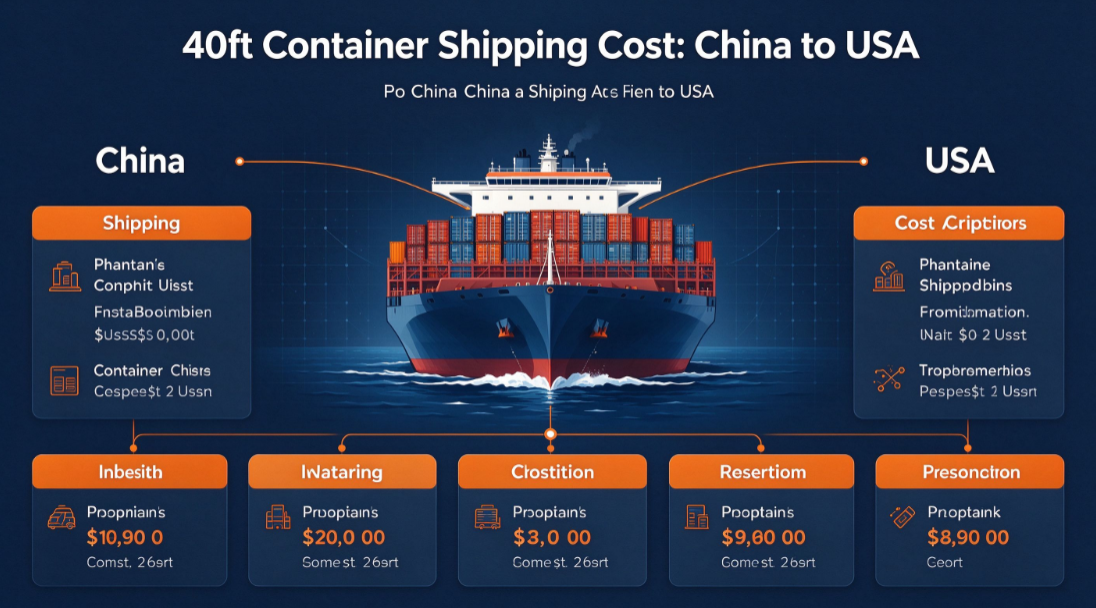
Executive Summary: Importing goods from China to the United States using a 40-foot container (40ft GP or 40ft High Cube) remains the backbone of global commerce. However, calculating the true cost of shipping a 40ft container from China to the USA involves much more than accepting a baseline ocean freight quote. In 2026, standard port-to-port ocean rates for a 40ft container typically range between $3,200 and $5,500 for US West Coast ports and $4,500 to $7,500+ for US East Coast destinations, subject to seasonal spikes, peak season surcharges (PSS), and macroeconomic fluctuations. Beyond base freight, actual land-to-land logistics expenses include Origin Terminal Handling Charges (OTHC), US Customs duties, harbor maintenance fees, local drayage, chassis fees, and potential demurrage or detention penalty costs. This comprehensive guide breaks down every line item, uncovers hidden port costs, examines key cost drivers, and shares practical industry strategies to help importers minimize total landed logistics costs without sacrificing schedule reliability.
1. Understanding the Baseline Cost: 40ft Container Rates (China to USA)
When booking ocean freight from major Chinese manufacturing hubs—such as Shanghai, Ningbo, Shenzhen, or Qingdao—to US ports of entry, container pricing varies primarily based on destination geography, vessel capacity, and carrier service level. Freight forwarders quote prices based on standard 40ft Dry Vans (40GP) or 40ft High Cubes (40HQ). Notably, 40HQ containers offer approximately 12% more volumetric space (around 76 CBM compared to 67 CBM) for a minimal price premium, making them the preferred standard for most general cargo importers.
The table below provides a realistic breakdown of current market rates and average transit times across major trade lanes:
Shibida Logistics(Top China freight forwarders)Cross-Border Logistics Line
Services: Sea Freight, Air Freight, DDP, FCL, LCL, Amazon FBA First Mile
Shibida Logistics(Top China freight forwarders) specializes in door-to-door one-stop shipping to the US, Europe, the Middle East and Southeast Asia. We deliver reliably with high on-time rates, own container pickup & trailer fleet, 18 years of experience, and have served over 30,000 enterprises.
View Logistics Solutions Get Detailed Quotation
Contact Us
📞 Phone: +86 15813899064
📧 Email: 732175850@qq.com
💬 WeChat ID: 15813899064
Scan WeChat QR Code

| Origin Port (China) | Destination Region (USA) | Main Ports of Entry | Estimated Ocean Freight Rate (40ft/40HQ) | Average Port-to-Port Transit Time |
|---|---|---|---|---|
| Shanghai / Ningbo / Shenzhen | US West Coast (USWC) | Los Angeles, Long Beach, Oakland, Seattle | $3,200 – $5,500 | 12 – 18 Days |
| Shanghai / Ningbo / Qingdao | US East Coast (USEC) | New York, Newark, Savannah, Charleston | $4,500 – $7,500 | 25 – 35 Days |
| Shenzhen / Guangzhou / Xiamen | US Gulf Coast (USGC) | Houston, Mobile, New Orleans | $4,800 – $7,800 | 28 – 38 Days |
| Major China Base Ports | US Inland Door / Ramp (IPI) | Chicago, Dallas, Memphis, Atlanta | $6,500 – $9,800 | 22 – 32 Days (via rail/truck) |
Note: The rates listed above reflect base ocean freight plus standard fuel adjustments. They do not include destination drayage, customs clearance, or localized US import tariffs.
2. Anatomy of an Invoice: Breaking Down the Total Landed Logistics Cost
A common pitfall for new importers is confusing the Base Ocean Freight Rate with the Total Landed Shipping Cost. When your 40ft container leaves the factory floor in China and arrives at your warehouse in the United States, your invoice will be split across three distinct phases: Origin Charges, Freight & Ocean Surcharges, and Destination Charges.
Phase 1: China Origin Charges
Before the container is loaded onto an ocean vessel, several local charges are incurred at the port of origin. These are usually paid directly by the buyer or supplier depending on the agreed Incoterms (e.g., FOB vs. EXW):
Factory Trucking / Drayage: $300 – $600 (Moving the empty container from the container yard to the factory, loading it, and trucking it back to the port).
Origin Terminal Handling Charges (OTHC): $150 – $300 (Paid to the port terminal operator to handle and lift the container onto the vessel).
Export Customs Clearance & Booking Fees: $100 – $200 (Documentation, export declarations, and forwarder handling fees).
Phase 2: Main Ocean Freight & Surcharges
This is the core cost negotiated with ocean carriers or NVOCCs (Non-Vessel Operating Common Carriers):
Base Ocean Freight: The primary carriage charge.
Bunker Adjustment Factor (BAF): A mandatory fuel floating surcharge adjusted based on global oil price trends.
Peak Season Surcharge (PSS): Imposed during high-demand months (typically August through October ahead of retail holidays).
Emergency Grievance / Risk Surcharges: Added during supply chain disruptions or rerouting scenarios.
Phase 3: US Destination & Landside Charges
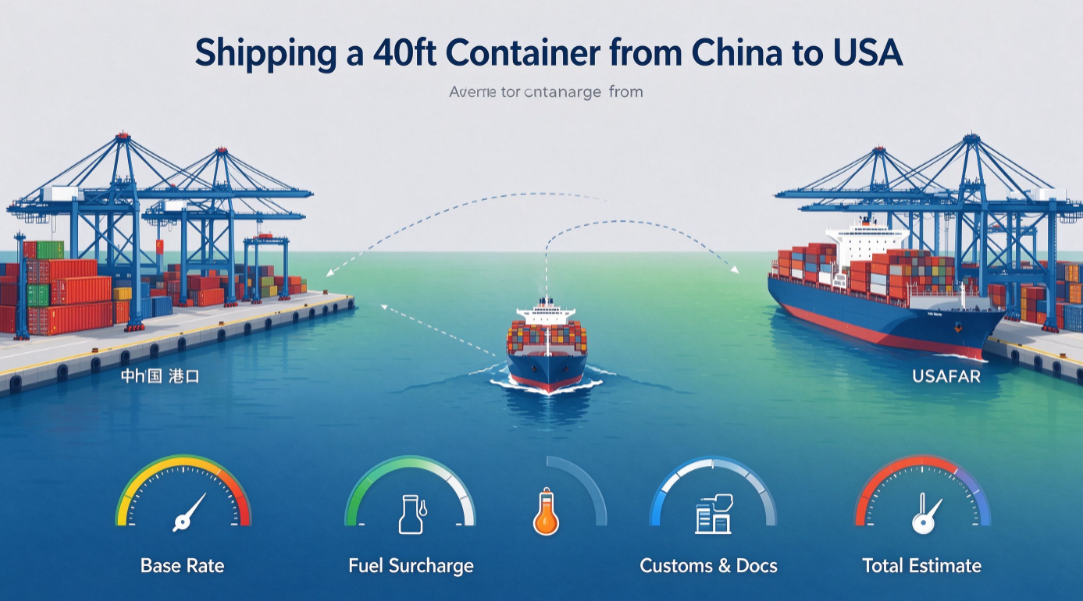
Once the vessel docks at a US port, the container incurs destination processing, regulatory clearance, and final-mile expenses:
Destination Terminal Handling Charges (DTHC): $350 – $650 per container (Charged by the US port terminal).
Customs Clearance & Brokerage Fee: $150 – $300 (Paid to a Licensed Customs Broker to file entry documents).
Customs Bond: $100 – $250 for a Single Entry Bond, or roughly $500 – $900 annually for a Continuous Import Bond.
US Government Regulatory Fees:
Merchandise Processing Fee (MPF): Ad valorem fee of 0.3464% of cargo value (min $31.67, max ~$614.35).
Harbor Maintenance Fee (HMF): 0.125% of cargo value (applies to ocean arrivals).
Chassis Rental Fee: $45 – $75 per day (The specialized trailer needed to haul the container behind a truck cab; usually rented for 3 to 7 days).
Destination Drayage / Final Mile Trucking: $400 – $2,500+ (Varies heavily based on mileage from the port/rail terminal to the final distribution center).
3. Key Cost Drivers: Why Freight Rates Surge and Fall
Understanding the underlying mechanics of ocean freight pricing empowers supply chain managers to time their bookings strategically. Five core variables drive market pricing for 40ft containers between China and the US:
A. Seasonality and the Lunar New Year Effect
The shipping market experiences predictable annual surges. The two most intense periods are:
1. Pre-Chinese New Year (CNY) Rush (January/February): Asian factories shut down for up to three weeks. Importers rush to move inventory before factories close, causing severe space shortages and driving spot rates up by 30% to 50%.
2. Pre-Holiday Peak Season (August to October): Importers stock up for Black Friday, Cyber Monday, and Christmas. Ocean carriers frequently implement General Rate Increases (GRI) and PSS during these months.
B. Geographic Route Dynamics (USWC vs. USEC)
Shipping to the US West Coast (e.g., Los Angeles/Long Beach) is consistently cheaper and faster than shipping to the East Coast (e.g., New York/Savannah). Routing to the East Coast requires transiting the Panama Canal or sailing around Africa, adding 2,000 to 4,000 nautical miles, extra transit time, and canal toll surcharges. However, if your destination warehouse is in the Eastern US, shipping directly via ocean to an East Coast port often yields a lower total cost than paying high US overland trucking or rail rates from Los Angeles.
C. Capacity Management (Blank Sailings)
Ocean shipping lines manage vessel supply by scheduling blank sailings (canceled voyages) when demand drops. By removing container capacity from the market, carriers prevent spot ocean rates from falling too rapidly, maintaining higher price floors even during off-peak months.
D. Equipment Imbalance Fees
Trade flows between the US and China are asymmetrical: China exports significantly more loaded containers to the US than it imports back. Carriers must reposition empty containers back to Asian factories. When equipment shortages occur in key Chinese ports (like Ningbo or Shenzhen), carriers often charge equipment imbalance surcharges to cover the cost of repositioning empty 40ft boxes.
E. Geopolitical Events, Canal Tolls, and Fuel Volatility
Global events impact shipping routes dramatically. Rerouting vessels due to canal disruptions, environmental fuel mandates (such as IMO low-sulfur regulations), or geopolitical instability increases marine fuel consumption, directly inflating BAF surcharges.
4. The Hidden Trap: Demurrage, Detention, and Storage Penalties
In containerized logistics, unexpected delay penalties can easily exceed the cost of the ocean freight itself. Veteran freight managers prioritize managing "free time" to prevent cash-flow leaks.
Demurrage: A fee charged by the port terminal when a loaded container remains inside the terminal past the allowed free time (typically 3 to 5 calendar days after discharge). Rates escalate daily, often ranging from $150 to $400+ per day per container.
Detention (Per Diem): A fee charged by the ocean carrier when you take the container out of the port for offloading but fail to return the empty container to the designated container yard within the agreed free time (typically 4 to 7 days). Rates average $100 to $250 per day.
Common causes for these penalties include:
US Customs holds or intensive physical inspections (X-ray or MET exam fees range from $300 to $1,500+, plus days of storage delays).
Chassis shortages preventing drayage drivers from picking up containers on time.
Warehouse congestion at the destination preventing timely unloading.
Incomplete or late ISF (Importer Security Filing) document submissions.
5. Practical Strategies from Logistics Experts to Cut Shipping Costs
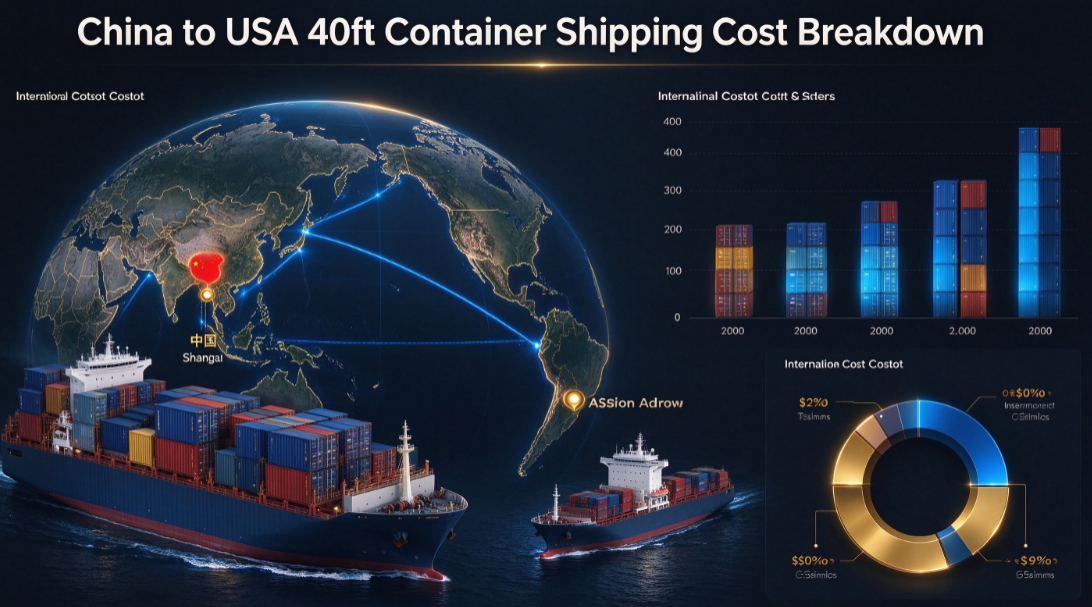
If you regularly import full container loads from China, implementing these practical logistics strategies can reduce your total annual logistics spend by 10% to 25%:
Strategy 1: Optimize Container Space (40GP vs. 40HQ)
Always evaluate your cargo's volumetric weight. Standard 40ft containers hold ~67 CBM, whereas 40ft High Cube containers hold ~76 CBM. Since the freight rate difference between a 40GP and a 40HQ is often as small as $100 to $200, upgrading to a 40HQ increases your unit loading density and lowers your per-unit landed freight cost significantly.
Strategy 2: Choose the Right Incoterms (FOB vs. CIF)
Many overseas buyers fall into the trap of accepting CIF (Cost, Insurance, and Freight) terms, allowing Chinese suppliers to arrange the shipping. Suppliers often choose the cheapest ocean carrier with high destination fees, leaving the buyer to pay inflated local charges at the destination port. Instead, control your freight by buying under FOB (Free on Board) terms. This allows you to choose your own US-based freight forwarder, negotiate transparent destination fees, and retain control over container routing.
Strategy 3: Negotiate Extended Free Time
Standard ocean quotes come with 3 to 5 days of free terminal storage and 4 to 7 days of detention. Before signing a booking confirmation, request your freight forwarder to negotiate 10 to 14 days of combined free time with the carrier. Having extra buffer days protects you against unexpected customs delays, chassis availability issues, or warehouse scheduling bottlenecks.
Strategy 4: Utilize Transloading Services
For shipments headed to inland US locations (such as Chicago or Dallas), shipping via ocean-rail (IPI) can lead to rail yard delays and chassis congestion. An effective alternative is transloading: trucking the 40ft container from the port to a nearby coastal warehouse, offloading the palletized goods into domestic 53ft dry vans, and shipping them inland via domestic trucking. This approach gets the marine container returned quickly, avoids detention fees, and lowers total overland transport costs.
Strategy 5: File ISF 10+2 Accurately and On Time
Under US Customs rules, the Importer Security Filing (ISF) must be submitted at least 24 hours before the vessel departs the Chinese port of loading. Failing to file on time or submitting inaccurate data results in mandatory $5,000 fines per violation from US Customs and Border Protection (CBP) and increases the likelihood of intensive container holds.
6. Step-by-Step Checklist for First-Time Importers
Executing a 40ft container move smoothly requires structured project management. Follow this operational checklist:
Confirm Incoterms with Supplier: Finalize FOB terms so you control shipping arrangements.
Audit Product Tariff Classifications: Work with a customs broker to verify exact HS (Harmonized System) Codes and determine applicable Section 301 tariffs or anti-dumping duties.
Secure a Customs Bond: Purchase an annual continuous bond if you plan to import more than two containers per year.
Request All-Inclusive Spot Quotes: Ask forwarders for door-to-door or port-to-door quotes that explicitly itemize DTHC, chassis, fuel, and drayage to avoid surprise surcharges later.
Submit ISF 10+2 Prior to Loading: Provide your customs broker with commercial invoices, packing lists, and bill of lading details before the ship leaves China.
Track "In-Transit" Milestones: Monitor key status updates: Container Loaded (POL) → Vessel Departure → Port Arrival (POD) → Customs Clearance → Drayage Pickup → Empty Return.
Final Takeaway: While baseline ocean freight rates for a 40ft container fluctuate based on market supply and demand, managing your total logistics costs effectively requires controlling landside variables. By buying on FOB terms, choosing 40HQ containers, securing extended free time, and filing customs documents early, importers can stabilize supply chain budgets and maintain strong margins across international trade lanes.
How to Book
To take advantage of these new routes and services, simply:
- Contact our dedicated 【cost of shipping 40ft container from china to usa】 desk at Contact
- Provide details of your shipment (cargo type, volume, pickup location)
- Receive a customized quote within 24 hours
- Confirm your booking and prepare your goods for shipment
Our team specialists is ready to assist with all aspects of your shipment, from documentation to delivery.
About Shibida Logistics
Shibida Freight Forwarding is a leading private logistics service provider based in China, offering comprehensive export logistics and warehousing services, international freight forwarding, FBA dedicated logistics, US overseas warehouses, and international logistics services from China to the world by land, air, and sea.
With our headquarters in Shenzhen and branch offices/agents covering almost all major cities and seaports in China, we strive to deliver your cargo to any destination worldwide safely, timely, and at reasonable prices.
For more information about our new Australia routes or to request a quote, please contact us today.