Shibida Logistics Team
Logistics Expert
Quick Summary: Freight shipping from China to Luxembourg is available by sea freight, air freight, express courier, and door-to-door DDP services. Since Luxembourg is a landlocked country, ocean cargo normally arrives through major European ports such as Antwerp in Belgium or Rotterdam in the Netherlands before continuing by truck or rail to Luxembourg. In November 2026, indicative sea freight rates are approximately $2,820–$3,396 for a 20GP container and $4,055–$4,944 for a 40GP container. LCL freight starts around $100.80/CBM, while air freight for shipments of 1,000 kg or more is approximately $5.46/kg. Express courier rates are around $9.81/kg. Typical transit times range from 5–7 days by air or express and 25–38 days by sea, depending on the route. For importers who prefer a simplified shipping process, DDP shipping from China to Luxembourg can include international transportation, customs clearance, import duties, VAT, and final delivery. Luxembourg's standard VAT rate is 17%, although the applicable rate depends on the product category.
Freight Shipping from China to Luxembourg | Air, Sea & DDP Rates
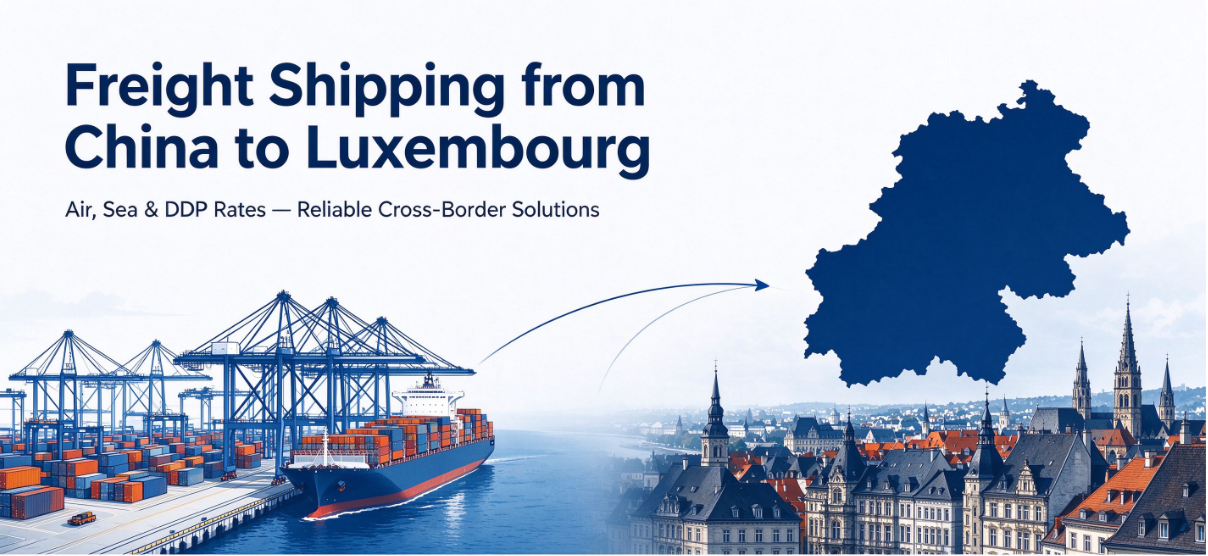
Shipping goods from China to Luxembourg has become increasingly important for European importers, wholesalers, e-commerce businesses, and manufacturers. Luxembourg is a small but strategically located European economy, surrounded by Belgium, France, and Germany. Its central position makes it an attractive distribution point for companies serving customers across Western Europe.
However, freight shipping from China to Luxembourg is slightly different from shipping to countries with major seaports, such as Germany, Belgium, or the Netherlands. Luxembourg is landlocked and has no commercial seaport. Most sea freight shipments must first arrive at a nearby European gateway port before being transported inland. This additional logistics stage affects shipping costs, delivery schedules, customs arrangements, and the choice of freight service.
Shibida Logistics(Top China freight forwarders)Cross-Border Logistics Line
Services: Sea Freight, Air Freight, DDP, FCL, LCL, Amazon FBA First Mile
Shibida Logistics(Top China freight forwarders) specializes in door-to-door one-stop shipping to the US, Europe, the Middle East and Southeast Asia. We deliver reliably with high on-time rates, own container pickup & trailer fleet, 18 years of experience, and have served over 30,000 enterprises.
View Logistics Solutions Get Detailed Quotation
Contact Us
📞 Phone: +86 15813899064
📧 Email: 732175850@qq.com
💬 WeChat ID: 15813899064
Scan WeChat QR Code

For importers, the main challenge is not simply finding the cheapest transportation rate. It is understanding the complete logistics cost, including Chinese export handling, international freight, European port charges, customs clearance, import taxes, and the final delivery to the Luxembourg address.
This guide explains the main shipping methods from China to Luxembourg, current estimated freight rates, transit times, destination logistics, customs requirements, and DDP shipping options. It also provides practical suggestions for selecting a suitable shipping method according to cargo volume, delivery deadlines, and import experience.
1. Shipping Rates from China to Luxembourg (November 2026)
The cost of shipping from China to Luxembourg depends on the transport method, cargo dimensions, gross weight, shipment volume, departure city, destination address, and current carrier capacity.
Sea freight is generally the most economical solution for large shipments, especially when a full container is required. Air freight is more suitable for urgent cargo and valuable products, while express courier services are convenient for smaller parcels and samples.
The following table provides indicative market reference rates for November 2026. These figures are budgeting estimates rather than guaranteed carrier quotations. The final amount depends on the selected route, local handling charges, fuel adjustments, and the exact delivery terms.
| Shipping Method | Estimated Cost (USD) | Transit Time | Best For |
|---|---|---|---|
| Sea Freight 20GP | $2,820–$3,396 | 25–34 days | Medium and large shipments |
| Sea Freight 40GP | $4,055–$4,944 | 25–34 days | Large-volume cargo |
| Sea Freight LCL | Around $100.80/CBM | 26–38 days | Small shipments and consolidation |
| Air Freight | Around $5.46/kg (1,000 kg+) | 5–6 days | Urgent commercial cargo |
| Express Courier | Around $9.81/kg | 5–7 days | Samples and small parcels |
| DDP Shipping | Custom quotation | Depends on transport method | Door-to-door delivery with import handling |
Important pricing note: The air freight benchmark of $5.46/kg applies to qualifying shipments of at least 1,000 kg. Smaller shipments normally have different weight breaks and may be more expensive per kilogram. Similarly, the LCL price is a freight benchmark and should not be confused with the complete landed cost. Origin handling, destination handling, customs clearance, and final delivery may be charged separately.
What Affects Shipping Costs from China to Luxembourg?
Several factors determine the actual freight quotation.
Cargo volume and weight: Sea freight is generally calculated by container size or chargeable cubic meter, while air freight uses chargeable weight.
Shipping route: The choice between Antwerp, Rotterdam, and other European gateway ports influences ocean freight and inland transportation charges.
Departure location in China: Shanghai, Ningbo, Shenzhen, Guangzhou, and Qingdao may have different origin handling and sailing options.
Delivery address: Transporting cargo to Luxembourg City may cost less than delivering to a remote industrial area or an address with restricted truck access.
Product characteristics: Dangerous goods, lithium batteries, oversized cargo, temperature-sensitive goods, and fragile products may require additional handling.
Customs requirements: Import duty, VAT, inspections, and product-specific compliance requirements can change the total landed cost.
When comparing freight forwarders, always ask whether the quotation includes origin charges, international transportation, destination terminal handling, customs brokerage, and delivery to the final address. A low ocean freight rate may become significantly more expensive after destination charges are added.
2. Sea Freight from China to Luxembourg
Sea freight is one of the most popular transportation methods for importers shipping commercial quantities from China to Luxembourg. It provides relatively low transportation costs per unit and is suitable for furniture, machinery, construction materials, household products, packaging supplies, industrial equipment, and general merchandise.
Because Luxembourg has no seaport, containers generally move through major North European gateways before reaching their final destination. The most common options include the Port of Antwerp in Belgium and the Port of Rotterdam in the Netherlands.
2.1 Main Shipping Routes and European Gateway Ports
Port of Antwerp, Belgium: Antwerp is an important gateway for cargo moving into Luxembourg. After containers are discharged, they can continue by road or intermodal rail transportation. Its established connections with Luxembourg make it a practical choice for many FCL and LCL shipments.
Port of Rotterdam, Netherlands: Rotterdam is another major European container gateway. It offers extensive international shipping connections and multiple onward transportation options. Depending on the carrier schedule and final destination, Rotterdam can be a competitive alternative to Antwerp.
Port of Zeebrugge, Belgium: Zeebrugge may also be considered for certain logistics arrangements, although it is not necessarily the most economical gateway for every China–Luxembourg shipment.
The best port is not always the one with the cheapest ocean freight. Importers should compare the total cost of port handling, customs procedures, inland transportation, and container release.
2.2 FCL Shipping: Full Container Load
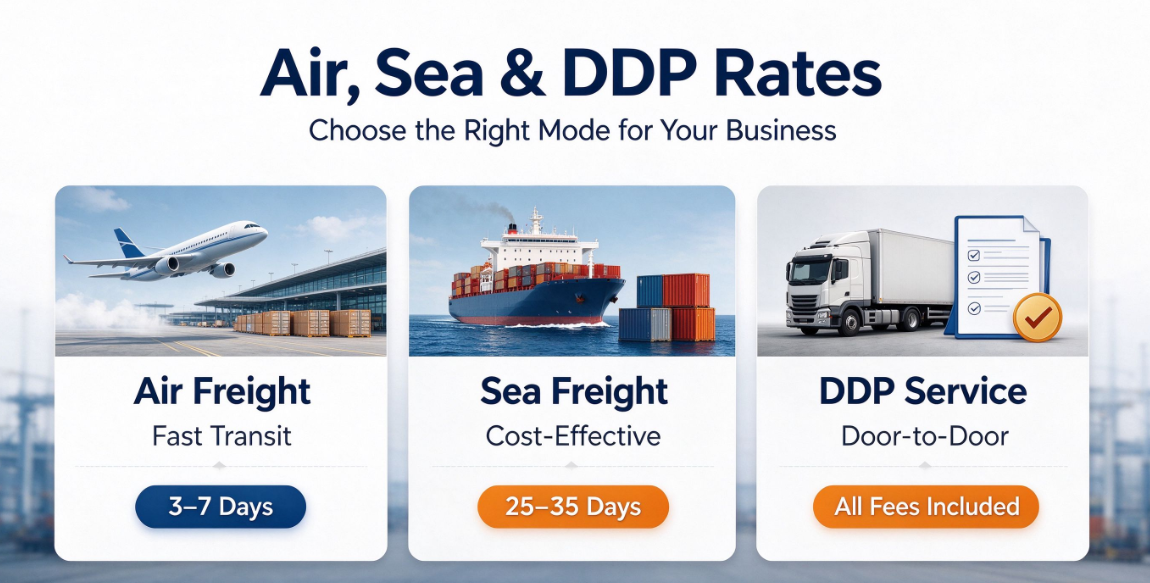
FCL shipping means that one shipper reserves an entire container for their cargo. It is normally the preferred solution for large or regularly recurring shipments.
| Container Type | Approximate Internal Volume | Estimated Freight Cost | Typical Use |
|---|---|---|---|
| 20GP | Approximately 28 CBM | $2,820–$3,396 | Small machinery, furniture and packaged products |
| 40GP | Approximately 58 CBM | $4,055–$4,944 | Large-volume commercial shipments |
| 40HQ | Approximately 68 CBM | Request current quotation | Bulky and lightweight cargo |
Actual usable loading volume depends on the cargo shape, packaging, loading method, and weight restrictions. The rates above are general reference figures rather than guaranteed 40HQ prices.
When should you choose FCL? For shipments above approximately 12–15 CBM, it is worth comparing both LCL and FCL quotations. As volume increases, the extra cost of booking an entire container may become more economical than paying LCL freight and multiple handling charges.
Before confirming a container booking, make sure the final cargo dimensions and gross weight are available. A container may have enough cubic capacity but still exceed its permitted payload or the road transport limits applicable to the delivery route.
2.3 LCL Shipping: Less Than Container Load
LCL shipping is suitable when your cargo does not occupy an entire container. Instead of paying for a 20GP or 40GP container, you share container space with other importers.
For example, an importer purchasing 3 CBM of household products, electronic accessories, or commercial samples may find LCL more economical than booking a full container.
The indicative November 2026 LCL benchmark for China-to-Luxembourg shipping is approximately $100.80 per CBM, with an estimated transit time of 26–38 days.
However, LCL shipping includes additional operational steps:
The supplier delivers cargo to a Chinese consolidation warehouse or collection point.
The warehouse checks the shipment information, dimensions, packaging, and shipping documents.
Cargo from multiple exporters is consolidated into a shared container.
The container moves by sea to a European gateway port.
After arrival, the container is transferred to a destination warehouse for deconsolidation.
Your shipment is cleared through customs and transported to the final Luxembourg address.
A practical consideration: LCL pricing is not always calculated using the visible ocean freight rate alone. Origin receiving fees, export handling, documentation, destination CFS charges, customs brokerage, and delivery can materially affect the final amount. Ask for a complete cost breakdown before approving the shipment.
2.4 Sea Freight Transit Time from China to Luxembourg
Typical sea freight transit times are approximately 25–34 days for containerized shipments and 26–38 days for LCL cargo, depending on the route and service arrangement.
| Route | Estimated Transit Time | Remarks |
|---|---|---|
| Shanghai – Antwerp – Luxembourg | 25–34 days | Common gateway arrangement |
| Ningbo – Rotterdam – Luxembourg | 25–34 days | Subject to vessel schedule and inland connection |
| Shenzhen – Antwerp – Luxembourg | 27–36 days | Service and transshipment dependent |
| China – Europe LCL – Luxembourg | 26–38 days | Consolidation and deconsolidation required |
These figures are planning benchmarks, not guaranteed delivery dates. The actual schedule can be affected by vessel connections, port congestion, customs inspections, container availability, public holidays, and the time required to arrange inland transport.
For shipments with a strict delivery deadline, leave an additional buffer rather than planning production or warehouse operations around the advertised vessel arrival date.
3. Air Freight from China to Luxembourg
Air freight is generally the best option when delivery speed is more important than transportation cost. It is widely used for electronic equipment, spare parts, high-value products, urgent replacement components, fashion items, and samples.
Unlike sea freight, air cargo does not require a maritime gateway port followed by a long inland container movement. Shipments may be routed directly to Luxembourg Airport (LUX), also known as Luxembourg Findel Airport, or through alternative European cargo airports before final road delivery.
3.1 Air Freight Rates from China to Luxembourg
Air freight charges are usually calculated according to chargeable weight rather than gross weight alone. The higher of the actual gross weight and volumetric weight normally determines the billable weight, subject to the airline or freight forwarder's calculation rules.
| Chargeable Weight | Indicative Pricing Guidance | Typical Application |
|---|---|---|
| 45–100 kg | Individual quotation required | Samples and small cargo |
| 100–300 kg | Individual quotation required | Small commercial orders |
| 300–500 kg | Individual quotation required | Medium-sized shipments |
| 500–1,000 kg | Individual quotation required | Regular commercial cargo |
| 1,000 kg+ | Around $5.46/kg | Large air freight consignments |
The benchmark rate of $5.46/kg is intended for qualifying shipments of 1,000 kg or more. It should not be applied automatically to smaller consignments.
3.2 How Is Air Freight Chargeable Weight Calculated?
Airlines charge according to the space occupied by the cargo as well as its actual weight. Therefore, a large but lightweight shipment can be more expensive than expected.
A commonly used volumetric calculation for standard air freight is:
Volumetric Weight (kg) = Length × Width × Height (cm) ÷ 6,000
For example, suppose a carton measures 100 cm × 80 cm × 60 cm and weighs 55 kg.
Volumetric weight = 100 × 80 × 60 ÷ 6,000.
Volumetric weight = 80 kg.
Actual gross weight = 55 kg.
Chargeable weight = 80 kg.
The shipment is therefore generally billed at 80 kg rather than 55 kg. Express courier companies may apply a different volumetric divisor, such as 5,000, so always confirm the calculation method with the service provider.
3.3 Air Freight Transit Time
Typical air freight transit time from China to Luxembourg is approximately 5–6 days under suitable airport-to-airport service arrangements. Actual door-to-door delivery may take longer because of export handling, customs procedures, airline schedules, and local distribution.
Common departure airports include:
Shanghai Pudong (PVG): An important international cargo gateway for commercial air freight.
Guangzhou Baiyun (CAN): Suitable for shipments originating in southern China.
Shenzhen Bao'an (SZX): Convenient for electronics, industrial components, and products from the Pearl River Delta.
Beijing Capital (PEK): Another option depending on the cargo origin and available flight capacity.
For European arrival, Luxembourg Airport (LUX) is a natural destination option. Some freight forwarders may also use airports in Frankfurt or Liège and arrange truck transportation to Luxembourg.
When comparing different air freight quotations, check whether the advertised transit time refers to airport-to-airport transportation or includes customs clearance and final delivery.
4. Express Shipping from China to Luxembourg
Express courier shipping is designed for smaller shipments that need fast and convenient delivery. It is commonly used for product samples, replacement parts, documents, prototypes, and lightweight online orders.
Major international courier companies such as DHL, FedEx, and UPS offer international delivery services from China to Luxembourg, subject to their route coverage, commodity restrictions, and service availability.
| Service | Estimated Cost | Transit Time |
|---|---|---|
| DHL Express | Quote according to weight | Approximately 3–6 days |
| FedEx International | Quote according to weight | Approximately 3–6 days |
| UPS International | Quote according to weight | Approximately 3–7 days |
| Economy Express | Around $9.81/kg indicative benchmark | Approximately 5–7 days |
Express courier quotations may include fuel surcharges, remote-area fees, residential delivery charges, and customs brokerage under certain service arrangements. Import duties and VAT may still be payable by the receiver unless the shipment is booked under an appropriate duty-paid service.
Best use: Express is usually a good option for shipments below approximately 45–100 kg when speed and simple tracking matter more than transportation cost. For larger consignments, compare express courier services with standard air freight before making a decision.
5. DDP Shipping from China to Luxembourg
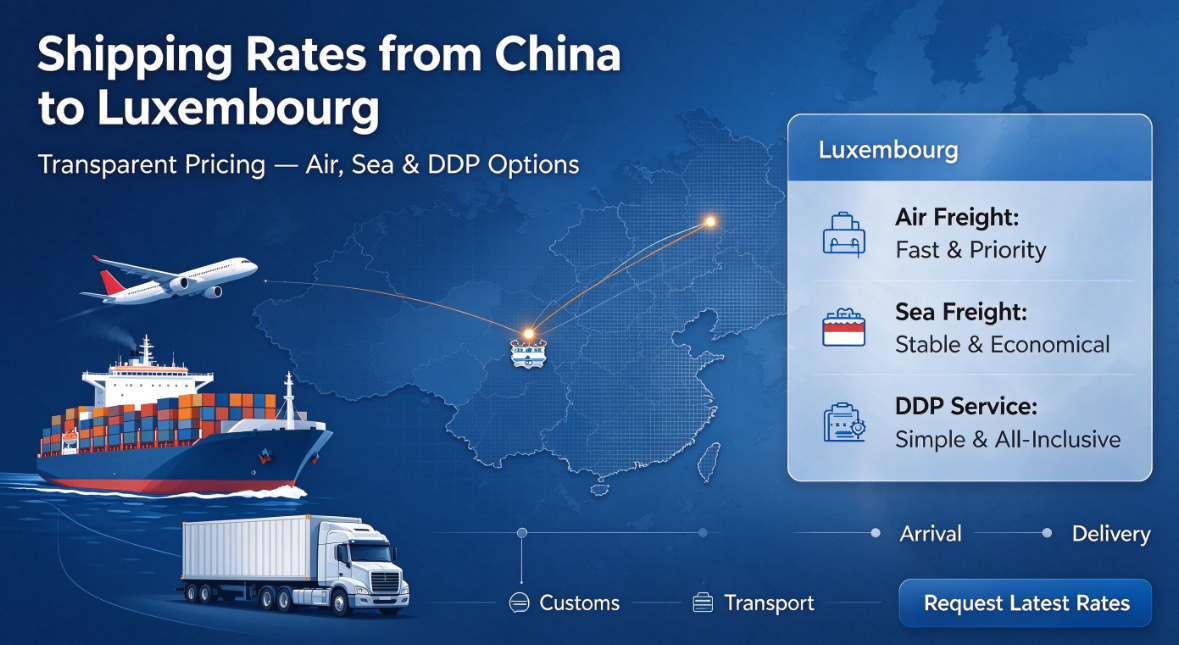
DDP stands for Delivered Duty Paid. It is an Incoterms delivery arrangement in which the seller is responsible for arranging transportation to the named destination and handling import clearance, duties, and applicable taxes.
For buyers who do not have experience with European import procedures, DDP shipping can make the process considerably simpler. Instead of independently arranging international transportation, customs brokerage, and local delivery, the buyer receives a coordinated door-to-door service.
DDP is particularly useful for:
New importers without an established customs broker.
Small and medium-sized businesses purchasing products from Chinese suppliers.
E-commerce businesses importing stock into Luxembourg.
Companies that prefer a consolidated logistics quotation.
Buyers who want to reduce the administrative burden of coordinating multiple service providers.
5.1 What Does DDP Shipping Include?
A properly arranged DDP shipment may include the following services:
| Service | Included in a Typical DDP Arrangement? |
|---|---|
| Cargo pickup in China | Yes, according to quotation |
| Export customs clearance | Yes |
| International transportation | Yes |
| European import customs clearance | Yes |
| Customs duties | Yes |
| Import VAT | Yes |
| Final delivery in Luxembourg | Yes, to the agreed delivery point |
| Unloading and special handling | Usually excluded unless agreed |
It is important to understand that DDP does not automatically mean every possible expense is covered. Special customs inspections, storage, demurrage, oversized cargo handling, restricted delivery access, and unloading may be excluded from the initial quotation.
5.2 DDP Shipping Rates from China to Luxembourg
Unlike standard ocean or air freight, DDP does not have one universal rate per container or kilogram. The service includes several cost components that depend on the imported goods and their declared value.
A DDP quotation is generally calculated using:
DDP Total Cost = Origin Charges + International Freight + Destination Handling + Customs Clearance + Import Duty + Import VAT + Final Delivery
The following table explains the main DDP service options:
| DDP Shipping Method | Transit Time | Pricing Basis | Recommended Cargo |
|---|---|---|---|
| DDP Sea LCL | Approximately 30–45 days | CBM and cargo details | Small and medium commercial shipments |
| DDP Sea FCL | Approximately 30–42 days | Container size and delivery address | Full-container shipments |
| DDP Air Freight | Approximately 7–12 days | Chargeable weight | Urgent commercial cargo |
| DDP Express | Approximately 5–8 days | Chargeable weight and service level | Samples and small parcels |
These are practical planning ranges for door-to-door services, not fixed carrier commitments. The actual rate must be calculated from the commodity description, HS code, customs value, cargo dimensions, gross weight, and delivery postcode.
5.3 How Is Import VAT Calculated for DDP Shipments?
Luxembourg has a relatively low standard VAT rate compared with many other EU countries. The standard rate is 17%, although certain categories of goods qualify for reduced VAT rates.
Import VAT is not necessarily calculated on the product purchase price alone. Under EU VAT rules, the taxable amount generally includes the customs value, applicable customs duties, and relevant additional expenses such as transportation and insurance to the first destination, to the extent that these amounts are not already included.
Example of an illustrative import tax calculation:
| Cost Component | Illustrative Amount |
|---|---|
| Product customs value | $10,000 |
| Freight and insurance to EU border | $1,000 |
| Customs value | $11,000 |
| Illustrative customs duty at 4% | $440 |
| Additional relevant transport expenses | $200 |
| Illustrative VAT taxable amount | $11,640 |
| Import VAT at 17% | $1,978.80 |
| Total illustrative duty and VAT | $2,418.80 |
Note: The 4% customs duty in this example is hypothetical and is not an actual tariff for a specific product. The correct rate must be checked using the product's HS code, country of origin, and applicable EU tariff measures. The calculation is also illustrative and must account for the actual customs valuation and VAT rules applicable to the transaction.
5.4 Important DDP Considerations for Luxembourg Importers
Although DDP is convenient, importers should not assume that using a DDP forwarder automatically solves every legal or tax responsibility.
Before confirming a DDP shipment, ask the freight provider:
Which company will be listed as the importer of record?
Whose EORI number will be used for the customs declaration?
In which EU country will the goods be imported and released for free circulation?
Does the quoted amount include the full Luxembourg import VAT and applicable customs duty?
Will the buyer receive the customs declaration and supporting import documentation?
What happens if customs authorities inspect the cargo or request additional product documents?
These questions are especially important for businesses that need to record import VAT or maintain accurate accounting documentation. A freight forwarder may coordinate tax-paid transportation through an approved local partner, but the importer and VAT responsibilities must be legally structured and clearly documented.
6. Customs Clearance in Luxembourg
Customs clearance is an essential part of importing goods from China to Luxembourg. Since Luxembourg is an EU member state, commercial imports from China are subject to the European Union customs framework.
Importers must provide accurate product information, declare the correct customs value, and use the appropriate tariff classification. Incorrect paperwork or incomplete product details can result in customs delays, additional inspections, storage charges, or reassessment of the declared customs value.
6.1 EORI Number
An EORI number (Economic Operators Registration and Identification) is required for economic operators carrying out customs operations in the EU.
For most commercial importers, obtaining a valid EORI number before the first shipment arrives is an important preparation step. The number identifies the business during customs procedures and is used in customs declarations.
Businesses should confirm that their EORI registration is valid and that the details match the company information used in commercial documents.
6.2 Customs Duties for Goods Imported from China
The European Union applies a Common Customs Tariff to goods entering its customs territory. The applicable customs duty depends mainly on three factors:
HS code: The product's customs classification determines which tariff category applies.
Customs value: The declared customs value is used to calculate the applicable duty.
Country of origin: The origin of the goods determines which tariff measures or trade restrictions may apply.
Different products can have substantially different customs duty rates. Some products may have zero import duty, while others may be subject to standard tariffs, anti-dumping duties, countervailing measures, or additional trade restrictions.
For example, machinery, furniture, textiles, electronic components, steel products, and chemical products should not be assumed to have the same duty rate simply because they are all imported from China.
It is advisable to check the current EU TARIC database or Access2Markets before ordering large quantities. Doing this before the supplier begins production can help avoid unexpected costs later.
6.3 Luxembourg Import VAT
The standard VAT rate in Luxembourg is 17%. Reduced VAT rates of 14%, 8%, and 3% are also available for eligible product categories.
The applicable rate should be determined according to the actual product classification and Luxembourg VAT rules. For most ordinary commercial products, the standard 17% rate is the relevant starting point.
For VAT-registered businesses, import VAT may potentially be recoverable subject to the applicable Luxembourg VAT requirements and the company's deduction rights. Importers should maintain the necessary customs and accounting records to support their tax reporting.
6.4 Customs Clearance Location: Antwerp, Rotterdam, or Luxembourg?
One important detail for Luxembourg-bound sea freight is deciding where the cargo will be customs-cleared.
There are generally two different arrangements:
Option 1: Customs clearance at the European gateway port. The goods are imported and released into free circulation in the country where customs clearance takes place. They can then move to Luxembourg as Union goods, subject to the relevant VAT and fiscal arrangements.
Option 2: Transit to Luxembourg under customs control. The cargo arrives at a gateway such as Antwerp or Rotterdam and moves under a customs transit procedure, commonly using a T1 transit document, to the designated customs office or approved destination in Luxembourg. Import clearance is then completed in Luxembourg.
The two arrangements have different customs, VAT, and administrative implications. If the buyer expects Luxembourg import VAT treatment, the customs broker must confirm that the declaration and import structure are correctly established before the goods leave the port.
Do not assume that the final delivery address automatically determines the country where customs duties and VAT are assessed. The actual customs procedure is what matters.
7. Documents Required for Shipping from China to Luxembourg
Preparing complete shipping documents is one of the simplest ways to prevent avoidable delays. The exact documentation depends on the cargo type, transportation method, and customs procedure, but most commercial shipments require the following:
| Document | Main Purpose |
|---|---|
| Commercial Invoice | Shows product descriptions, quantities, values, currency, seller and buyer information. |
| Packing List | Provides carton numbers, dimensions, gross weight, net weight, and packing details. |
| Bill of Lading (B/L) | Confirms the contractual details of ocean transportation. |
| Air Waybill (AWB) | Provides shipment details for air cargo. |
| EORI Number | Identifies the relevant economic operator for EU customs procedures. |
| Certificate of Origin | Provides origin information when required by the buyer, customs procedure, or relevant trade measure. |
| Product Compliance Documents | Supports regulatory compliance for products subject to specific EU requirements. |
For ordinary commercial goods, the commercial invoice and packing list should be checked carefully before shipment.
For regulated products, additional documents may be necessary. Electronics may require relevant CE conformity documentation. Cosmetics can require EU Responsible Person and CPNP arrangements. Food products may be subject to food safety and import control rules. Lithium batteries may require battery transport documentation, test summaries, and appropriate dangerous-goods declarations depending on the shipping method.
Practical recommendation: Avoid using vague descriptions such as "accessories," "parts," or "general merchandise" on commercial invoices. Use a clear product name, material, intended function, quantity, and correct HS code where possible. This gives customs brokers more useful information for preparing accurate declarations.
8. How to Ship Goods from China to Luxembourg: Step-by-Step Process
For first-time importers, the shipping process can seem complicated. In practice, it becomes easier when each stage is confirmed before the cargo moves to the next one.
Step 1: Confirm the Cargo Details
Ask your Chinese supplier for the cargo's exact packing information. This should include the number of cartons or pallets, dimensions, gross weight, net weight, cargo volume, product description, and loading location.
For palletized cargo, provide the complete pallet dimensions and whether the pallets are stackable. This information helps the freight forwarder calculate the most suitable transportation method.
Step 2: Compare Shipping Options
Request separate quotations for LCL, FCL, air freight, and DDP where applicable. Comparing different service options can reveal whether an apparently cheaper shipping method will actually cost more after destination charges and customs procedures are included.
Step 3: Confirm the Incoterms
Before booking, confirm whether the supplier is quoting EXW, FOB, CIF, DAP, or DDP. These terms determine which party is responsible for different stages of the transportation process.
Step 4: Arrange Export Customs Clearance in China
The supplier or appointed export agent prepares the required export paperwork and completes the Chinese export customs procedures. The cargo is then delivered to the relevant port, airport, or consolidation warehouse.
Step 5: International Transportation
Depending on the chosen shipping method, the cargo moves by container ship, aircraft, or express courier network. The freight forwarder provides shipment updates, booking details, and transportation documentation.
Step 6: European Customs Clearance
Upon arrival in Europe, the cargo is processed according to the agreed customs arrangement. Import declarations, duty assessment, VAT payment, and any applicable inspections must be completed before release.
Step 7: Final Delivery in Luxembourg
After customs release, the cargo is transported to the consignee's warehouse, office, residence, or designated commercial delivery address.
For FCL deliveries, confirm whether the destination can accommodate a full-size container truck and whether unloading equipment is available. For LCL cargo, the local delivery provider may require a suitable unloading point, forklift access, or a scheduled delivery appointment.
9. Choosing the Right Shipping Method for Your Business
The most suitable shipping solution depends on your cargo volume, delivery deadline, product value, and import experience.
| Your Situation | Recommended Method | Reason |
|---|---|---|
| Less than 2 CBM | LCL or Express | Avoids paying for unused container space. |
| 2–12 CBM | LCL Sea Freight | Generally offers a reasonable balance between cost and capacity. |
| Above 12–15 CBM | Compare LCL and FCL | A dedicated container may offer better overall economics. |
| Urgent cargo | Air Freight | Significantly shorter transit time. |
| Small parcels or samples | Express Courier | Convenient pickup, tracking, and delivery. |
| No customs experience | DDP Shipping | Combines transportation and import handling into a coordinated service. |
Sea Freight vs Air Freight: Which Is Better?
Sea freight generally wins on cost when shipping large quantities. Air freight wins on speed, especially when products are high-value or delays could interrupt business operations.
For example, a company importing several pallets of furniture for a warehouse replenishment order will usually find sea freight more economical. A manufacturer waiting for an urgent machine replacement component may prefer air freight because the cost of production downtime can exceed the additional transportation expense.
For shipments in the middle range, compare the total landed cost instead of looking at freight alone. The difference in transportation cost becomes less important when customs, storage, local delivery, and inventory costs are considered.
10. Practical Tips to Reduce Shipping Costs to Luxembourg
Reducing international transportation costs does not necessarily mean selecting the cheapest forwarder. Better shipment planning can often generate more savings while reducing the risk of delays and unexpected charges.
1. Consolidate Cargo from Different Suppliers
If you purchase goods from multiple Chinese suppliers, consider consolidating them at one warehouse in China. Instead of arranging several separate shipments, the cargo can be inspected, repacked if necessary, and loaded into one LCL or FCL shipment.
This approach can reduce duplicated export handling and simplify destination customs processing, although it adds warehouse handling and coordination requirements.
2. Optimize Packaging and Pallet Dimensions
Excessive packaging increases shipping volume without necessarily providing additional protection. Ask suppliers to use appropriately sized cartons and stable pallet configurations.
For European deliveries, commonly used Euro pallet dimensions are 1200 × 800 mm. Ensure that pallet height and loading configuration are compatible with the final transportation vehicle.
If solid wood packaging is used, ensure that it complies with applicable ISPM 15 treatment and marking requirements.
3. Compare Antwerp and Rotterdam Routes
Do not assume that one port will always be the cheapest choice. Compare ocean freight, vessel schedules, terminal charges, inland transportation, and customs arrangements for both gateways.
For a particular cargo shipment, a slightly higher port-to-port rate may still result in a lower total cost if inland transportation and handling are more efficient.
4. Prepare Customs Documents Before Cargo Departure
Correcting an incorrect commercial invoice after cargo arrival can cause unnecessary delays. Confirm the HS code, customs value, product description, EORI details, and required compliance documents before shipment.
This is particularly important for goods that may require technical documentation, safety certification, or additional regulatory approval.
5. Book During Appropriate Shipping Windows
Shipping costs and capacity can change during Chinese New Year, Golden Week, major European holiday periods, and seasonal demand peaks.
For sea freight, booking at least two to three weeks before the expected departure is a useful planning target, although peak periods may require more preparation. Air freight customers should also confirm space availability before committing to a production or delivery schedule.
6. Purchase Cargo Insurance
International carriers have limited liability under their applicable transport conditions. Their liability may not fully cover the commercial value of damaged, lost, or stolen goods.
For expensive or fragile products, consider cargo insurance that matches the actual value of the goods and the risks involved in the transportation process. Review the coverage exclusions and claims documentation requirements before purchasing the policy.
11. Why Luxembourg Is an Important European Logistics Destination
Although Luxembourg is geographically small, its location gives it an important role in European distribution and international logistics.
It sits at the crossroads of several major European markets. Businesses based in Luxembourg can coordinate supply chains serving neighboring countries, while the country's established road, rail, and air freight infrastructure supports international cargo movements.
Bettembourg Intermodal Terminal
The Bettembourg-Dudelange intermodal terminal is one of Luxembourg's important logistics facilities. Located near major highway and railway connections, it supports the movement of containers, swap bodies, and trailers between different transportation networks.
The terminal has established connections with European locations, including Antwerp, making it relevant to certain sea freight logistics arrangements.
For importers, this means that cargo does not always need to move exclusively by truck after arriving at a North European port. Depending on the service schedule and cargo requirements, intermodal rail transportation can be considered as part of the onward logistics plan.
Luxembourg Airport
Luxembourg Airport (LUX) provides an important air cargo gateway for the country. It is particularly relevant for importers handling time-sensitive, high-value, or specialized cargo.
For shipments that cannot be accommodated through the selected flight service to Luxembourg, alternative airport gateways in neighboring countries may be used, followed by road transportation.
These logistics options give importers flexibility when balancing freight price, transit time, and service availability.
12. Frequently Asked Questions About Freight Shipping from China to Luxembourg
Q1: How much does it cost to ship from China to Luxembourg?
The cost depends on the shipping method, volume, weight, route, and service scope. As November 2026 reference rates, sea freight is approximately $2,820–$3,396 for a 20GP container and $4,055–$4,944 for a 40GP container. LCL is around $100.80 per CBM, while air freight for shipments of 1,000 kg or more is approximately $5.46/kg. Express courier freight is around $9.81/kg. DDP requires a separate calculation that includes product-specific duties, VAT, and final delivery costs.
Q2: How long does shipping from China to Luxembourg take?
Sea freight generally takes around 25–34 days for the main route, while LCL may take 26–38 days because of consolidation and deconsolidation. Air freight typically takes 5–6 days under suitable airport-to-airport arrangements. Express courier services usually take approximately 5–7 days. Actual door-to-door delivery times depend on customs clearance and inland transportation.
Q3: Does Luxembourg have a seaport?
No. Luxembourg is a landlocked country and does not have a commercial seaport. Ocean freight normally arrives at nearby European ports, especially Antwerp in Belgium or Rotterdam in the Netherlands. The cargo is then transported inland by truck or rail.
Q4: Which port is best for shipping from China to Luxembourg?
Antwerp and Rotterdam are the main gateway options to consider. Antwerp can be particularly convenient because of its established inland transportation connections with Luxembourg. Rotterdam is a strong alternative with extensive international container services. The best option depends on the shipping line, destination charges, customs arrangement, and final delivery location.
Q5: Is DDP shipping available from China to Luxembourg?
Yes. DDP services can arrange cargo pickup in China, export clearance, international transportation, European import clearance, duties, applicable VAT, and final delivery to Luxembourg. However, buyers should confirm the importer of record, EORI arrangements, VAT treatment, and the exact services included in the quotation before booking.
Q6: What is the VAT rate in Luxembourg?
Luxembourg's standard VAT rate is 17%. It also has reduced VAT rates of 14%, 8%, and 3% for qualifying categories. The rate applicable to an import depends on the nature and classification of the goods. Importers should verify the correct treatment before shipment.
Q7: Do I need an EORI number to import goods into Luxembourg?
In general, businesses carrying out EU customs operations need an EORI number. It is used to identify economic operators during customs procedures. Importers should arrange the appropriate registration before their first commercial shipment arrives.
Q8: Can I ship small quantities from China to Luxembourg?
Yes. Small shipments can be sent by LCL sea freight, standard air freight, or express courier. LCL is often suitable for cargo measured in a few cubic meters, while express courier is more convenient for parcels and samples that need fast delivery.
Q9: What documents are needed for customs clearance?
Most commercial shipments require a commercial invoice, packing list, and relevant transport document, such as a bill of lading or air waybill. An EORI number is generally required for the relevant customs operator. Additional documents may be necessary depending on the commodity, customs procedure, and product regulations.
Q10: Can my goods be cleared at Antwerp and then delivered to Luxembourg?
Yes. Goods can be imported and released into free circulation in Belgium before being transported to Luxembourg, provided the customs and fiscal requirements are correctly handled. Alternatively, goods can move under an appropriate customs transit procedure and be cleared in Luxembourg. The correct option depends on the importer's VAT arrangements and the agreed customs process.
Q11: Is air freight cheaper than express courier?
For larger shipments, standard air freight is generally more economical than express courier. Express services offer convenient collection, tracking, and delivery, but their per-kilogram charges are often higher. Businesses shipping several hundred kilograms or more should compare standard air freight quotations before choosing a courier service.
Q12: Are import duties included in a DDP quotation?
Under properly agreed DDP Incoterms, the seller is responsible for import clearance and applicable import duties and taxes. Nevertheless, buyers should verify that the actual quotation includes these costs and identify the company responsible for the customs declaration. Excluded charges and special compliance costs should also be clarified in writing.
13. Get a Freight Shipping Quote from China to Luxembourg
Choosing the right shipping solution requires more than comparing the headline price per kilogram or container. The complete cost depends on the cargo's dimensions, transportation method, European gateway, import requirements, and final delivery address.
For larger shipments, sea freight through Antwerp or Rotterdam is often a practical choice. For urgent goods, air freight can reduce delivery time significantly. For buyers who want a coordinated international shipping and customs service, DDP can simplify the import process, provided that the customs and VAT arrangements are properly established.
To receive an accurate freight quotation from China to Luxembourg, prepare the following information:
Origin: Supplier or warehouse address in China.
Destination: Delivery postcode and full address in Luxembourg.
Cargo description: Product name, material, intended use, and HS code if available.
Shipping volume: Total cubic meters or individual carton dimensions.
Gross weight: Total shipment weight.
Packaging: Number of cartons, pallets, or containers.
Shipping preference: Sea freight, air freight, express, or DDP.
Delivery requirements: Required arrival date, customs arrangements, and unloading conditions.
Plan Your China-to-Luxembourg Shipment with Confidence
A detailed quotation should clearly separate international freight, origin handling, destination charges, customs duties, VAT, and final delivery. With the correct route and customs arrangements, businesses can control their logistics budget and avoid unnecessary delays when importing from China to Luxembourg.
Shipping rates and transit times in this guide are indicative market estimates for November 2026. Actual quotations may change according to carrier capacity, fuel surcharges, origin and destination charges, cargo characteristics, customs valuation, and local delivery requirements. Customs duty and VAT calculations should always be verified against the applicable product classification and current regulations before shipment.
How to Book
To take advantage of these new routes and services, simply:
- Contact our dedicated 【Freight Shipping from China to Luxembourg | Air, Sea & DDP Rates】 desk at Contact
- Provide details of your shipment (cargo type, volume, pickup location)
- Receive a customized quote within 24 hours
- Confirm your booking and prepare your goods for shipment
Our team specialists is ready to assist with all aspects of your shipment, from documentation to delivery.
About Shibida Logistics
Shibida Freight Forwarding is a leading private logistics service provider based in China, offering comprehensive export logistics and warehousing services, international freight forwarding, FBA dedicated logistics, US overseas warehouses, and international logistics services from China to the world by land, air, and sea.
With our headquarters in Shenzhen and branch offices/agents covering almost all major cities and seaports in China, we strive to deliver your cargo to any destination worldwide safely, timely, and at reasonable prices.
For more information about our new Australia routes or to request a quote, please contact us today.