Shibida Logistics Team
Logistics Expert
Shipping from China to the USA: The Complete 2026 Guide to Costs, Transit Times, Customs, and Best Practices
The trans-Pacific shipping lane between China and the United States stands as the busiest and most economically significant trade route in the world. In 2026, this corridor moves over $500 billion worth of goods annually, spanning every category from consumer electronics and apparel to industrial machinery and furniture. For importers, e-commerce sellers, small business owners, and even individuals sending personal shipments, understanding the complexities of this route is no longer optional—it is a fundamental business necessity. As of late 2026, the landscape has shifted dramatically: ocean freight rates have climbed to multi-year highs amid global port congestion, air freight costs have surged 40% year-over-year, and the historic $800 de minimis duty-free exemption for Chinese-origin goods has been permanently eliminated, fundamentally altering cost calculations for every shipment size.
What makes this route uniquely challenging is the extraordinary spread between available options. A 200-kilogram shipment can move for just a few hundred dollars via slow ocean freight, or cost several thousand dollars via express air courier—a 10x price difference that can make or break profit margins. There is no universal "best" shipping method; the optimal choice depends on a complex interplay of cargo weight, volume, value density, time sensitivity, destination address, and compliance requirements. This guide provides a comprehensive, up-to-date breakdown of every shipping mode, current 2026 cost structures, evolving customs regulations, port selection strategies, common pitfalls, and practical decision frameworks to help you navigate this critical trade lane with confidence.
1. Overview of Shipping Modes: Choosing the Right Channel for Your Cargo
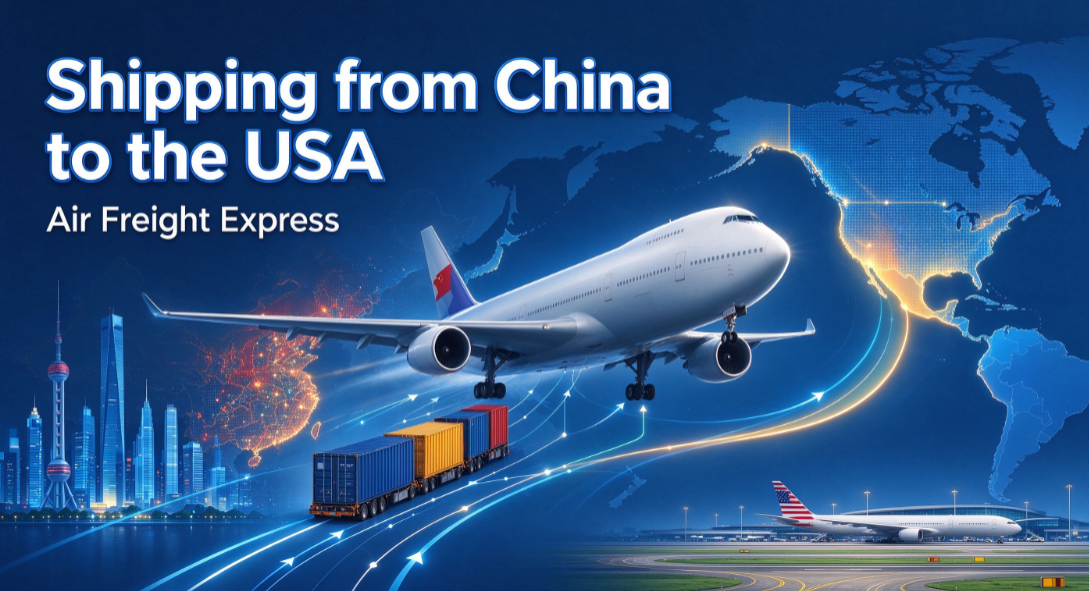
Before diving into specific costs and procedures, it is essential to understand the four primary shipping modes available for China-to-USA movements, each designed for distinct cargo profiles and operational requirements. The key insight that most new importers miss is that "cheapest" is not a mode—it is a function of matching your cargo characteristics to the right service. A high-value, lightweight electronic device may actually be cheaper to ship by air once you account for inventory holding costs and faster time-to-market, while a 5,000-kilogram shipment of patio furniture will always move most economically by sea.
Shibida Logistics(Top China freight forwarders)Cross-Border Logistics Line
Services: Sea Freight, Air Freight, DDP, FCL, LCL, Amazon FBA First Mile
Shibida Logistics(Top China freight forwarders) specializes in door-to-door one-stop shipping to the US, Europe, the Middle East and Southeast Asia. We deliver reliably with high on-time rates, own container pickup & trailer fleet, 18 years of experience, and have served over 30,000 enterprises.
View Logistics Solutions Get Detailed Quotation
Contact Us
📞 Phone: +86 15813899064
📧 Email: 732175850@qq.com
💬 WeChat ID: 15813899064
Scan WeChat QR Code

| Shipping Mode | Best For | Reference Cost (2026) | Transit Time (Door-to-Door) |
|---|---|---|---|
| Ocean FCL (Full Container Load) | Bulky/heavy cargo >15 CBM, cost-sensitive bulk shipments | $2,000–$8,000 per container | 20–45 days |
| Ocean LCL (Less than Container Load) | Small volumes 1–15 CBM, new product testing | $40–$120 per CBM | 25–50 days |
| Air Freight | Time-critical cargo, high value density, emergency restocks | $3.50–$8.50 per kg | 5–12 days |
| Express Courier | Samples, documents, urgent small parcels <100 kg | $5–$12 per kg | 2–5 days |
1.1 Ocean Freight: FCL vs. LCL
Ocean freight remains the backbone of China-USA trade, carrying approximately 70% of all goods by value and over 90% by volume. It splits into two fundamental commercial models: Full Container Load (FCL) and Less than Container Load (LCL). Understanding when to use each is critical for cost optimization.
Full Container Load (FCL) means you rent an entire shipping container—either a 20-foot (20GP), 40-foot standard (40GP), or 40-foot high cube (40HQ)—exclusively for your cargo. This is the preferred mode when your shipment volume exceeds 15 cubic meters (CBM) or weighs more than 10 tons, as the per-unit cost drops dramatically at this threshold. As of November 2026, spot rates have climbed significantly due to global port congestion and peak season demand: Shanghai to Los Angeles/Long Beach (US West Coast) currently averages $7,500–$8,500 per 40ft container, while Shanghai to New York (US East Coast) runs $9,500–$10,500 per 40ft container. Note that these rates fluctuate weekly, with carriers announcing General Rate Increases (GRIs) of $1,000–$3,000 per FEU during peak periods. For 20GP containers, rates typically run 60–70% of the 40ft price, making 40HQ containers better value for most shippers when volume allows.
There are two distinct service tiers within FCL: premium express services and standard general cargo. Matson Navigation's premium CLX service, for example, offers dedicated terminals in both China and Long Beach, with port-to-port transit times of just 11–13 days from Shanghai to Los Angeles, compared to 18–25 days for standard carriers like Maersk, COSCO, or MSC. This speed comes at a premium of $500–$1,500 per container but is invaluable for Amazon FBA sellers needing to replenish inventory ahead of Black Friday or Prime Day. ZIM and other carriers also offer premium express services with comparable transit times at slightly lower price points.
Less than Container Load (LCL), also known as consolidation shipping, is designed for shipments too small to fill an entire container. Your cargo shares space with other importers' goods inside a single container, and you pay only for the volume or weight your shipment occupies, whichever is higher (the "W/M" rule). In 2026, LCL rates to US West Coast destinations average $65–$85 per CBM, while East Coast destinations run $90–$120 per CBM due to longer transit distances and additional handling. Most consolidators impose a 1 CBM minimum charge, so even a 0.5 CBM shipment will be billed as 1 CBM.
While LCL appears cheaper on the surface for small volumes, it carries important trade-offs. Consolidation and deconsolidation at both origin and destination add 5–10 days to total transit time compared to FCL, and the increased number of handling touchpoints raises the risk of damage or loss. LCL shipments also tend to attract higher customs inspection rates because multiple consignments are grouped in one container—if one shipper's cargo triggers an inspection, every shipment in that container may be delayed. Additionally, LCL is rife with hidden destination fees (CFS charges, documentation fees, handling fees) that can double the total cost compared to the initial quoted rate, a trap that catches over 40% of first-time LCL shippers according to 2026 industry surveys.
1.2 Air Freight: Balancing Speed and Cost
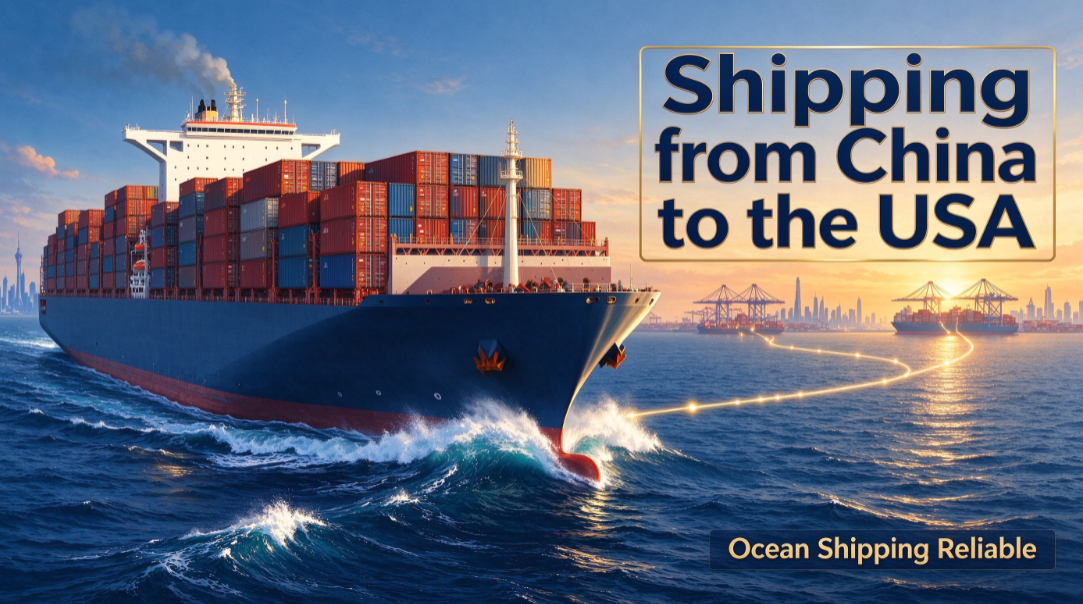
Air freight is the middle option between ocean and express, offering significantly faster transit than ocean at a fraction of the cost of door-to-door express courier. It is ideal for time-sensitive shipments weighing between 100 kg and 1,000 kg—too large for economical express but too urgent for ocean. In late 2026, air freight rates from China to the USA have surged dramatically: the China-North America air freight index reached $7.76 per kg in early November, up 9% in a single week and 40% higher than the same period in 2025, approaching the December 2025 peak of $8.00 per kg. This spike is driven by Thanksgiving and Christmas peak season demand, reduced passenger belly capacity, and pre-holiday inventory restocking across all retail sectors.
Standard air freight operates airport-to-airport: you or your freight forwarder handle trucking to the origin airport, export customs clearance, and import clearance plus final delivery at the destination. Door-to-door air freight services (often called "air special line" or "air express") consolidate these steps into a single service, typically costing $4–$8 per kg with total transit of 7–10 days to West Coast destinations and 8–12 days to East Coast addresses. For comparison, direct airport-to-airport rates are lower at $3.50–$6.00 per kg but require you to arrange additional logistics steps.
Air freight pricing uses volumetric weight calculations, just like express shipping: chargeable weight = length(cm) × width(cm) × height(cm) ÷ 6000. This means light, bulky items like pillows, plastic storage containers, or foam packaging can be surprisingly expensive to ship by air, as you will be billed for volume weight rather than actual weight. If shipping volumetric cargo, always ask your forwarder about "split bubble" or dimensional weight discount programs, which can reduce billed weight by 20–30% for eligible shipments.
1.3 Express Courier: Fastest Door-to-Door Service
International express carriers—DHL, FedEx, UPS, and to a lesser extent USPS via China Post—offer the fastest, most convenient door-to-door shipping solution. These services include all pickup, export clearance, international transport, import clearance, and final delivery in a single flat rate per kilogram, with tracking available throughout the entire journey. In 2026, express rates from China to the USA generally range from $5–$12 per kg depending on weight bracket (smaller parcels cost more per kg), with delivery in 2–5 business days to most US addresses.
Express is the default choice for documents, product samples, urgent small parcels, and high-value items under 100 kg. The major integrators have powerful customs clearance capabilities and very low damage rates, but they come with important caveats. First, dimensional weight divisors for express are often 5000 rather than 6000 (depending on carrier), making bulky items even more expensive than standard air freight. Second, express carriers charge extensive accessorial fees: residential delivery surcharges ($3–$5 per shipment), remote area surcharges ($20–$40 per shipment for zip codes outside standard service areas), fuel surcharges (15–25% of base rate, updated monthly), and oversize/overweight fees that can easily add 30–50% to your quoted rate.
A critical development for 2026 is that express shipments from China no longer benefit from duty-free treatment, even for low-value parcels. All express imports now require formal or informal customs entry and applicable duty payment, eliminating the previous advantage of using express for small B2C e-commerce shipments under $800. This has narrowed the cost gap between express and consolidated air freight services, making the latter more attractive for many commercial shipments.
2. Comprehensive Cost Breakdown: Beyond the Base Freight Rate
The most common mistake new shippers make is treating the quoted ocean or air freight rate as the total cost. In reality, freight typically represents only 50–70% of total landed cost, with a wide range of origin, destination, regulatory, and accessorial charges making up the balance. These "hidden fees" are the number one source of budget overruns and profit erosion on China-USA shipments, with 42.7% of shippers reporting unexpected charges in 2026 surveys.
2.1 Origin Charges in China
Before your cargo even leaves China, you will encounter a standard set of origin fees that apply to nearly all shipments:
Inland Trucking/Transportation: Moving cargo from your factory to the port or airport, typically $150–$350 per FCL container depending on distance from the port. Factories in Guangdong province near Shenzhen/Yantian ports will pay minimal trucking costs, while factories in inland provinces like Sichuan or Hubei may incur $500+ in domestic transport fees.
Export Customs Declaration: Preparing and filing Chinese export documentation, $80–$150 per shipment. This is usually included in freight forwarder service packages but should be explicitly confirmed.
Terminal Handling Charge (THC): Port fees for loading containers onto vessels, $150–$250 per container at Chinese ports. This charge is frequently itemized separately from base ocean freight.
Documentation Fee (DOC): Bill of lading issuance and document processing, $50–$90 per shipment.
ISPS Security Fee: International port security charge, $30–$60 per container.
Seal Fee, VGM (Verified Gross Mass) Filing Fee: $20–$50 combined per container.
AMS (Automated Manifest System) Filing Fee: US-bound security filing requirement, $30–$50 per shipment, mandatory for all ocean cargo.
For air freight, additional origin charges include airline security screening fees ($0.10–$0.30 per kg), unit load device (ULD) build-up fees for palletizing cargo, and dangerous goods handling fees if shipping regulated commodities like lithium batteries or chemicals.
2.2 Ocean Freight Surcharges: The Fast-Growing Cost Category in 2026
2026 has seen an explosion in targeted surcharges on the trans-Pacific lane, as carriers seek to maximize revenue amid strong demand and constrained effective capacity. These surcharges can add 20–50% to base ocean freight rates and frequently appear after you receive an initial quote, making cost forecasting difficult. Key surcharges currently in effect include:
Bunker Adjustment Factor (BAF)/Fuel Surcharge: Tied to global bunker fuel prices, typically 15–30% of base ocean rate. High oil prices in late 2026 have kept this surcharge elevated.
Peak Season Surcharge (PSS): Applied during traditional shipping peaks (August–October for holiday goods), ranging from $500–$2,000 per container in 2026. Carriers have attempted to impose PSS as high as $3,000 per FEU in November 2026, though enforcement varies based on market conditions.
Congestion Surcharge: Applied when ports experience significant vessel waiting times. As of late 2026, congestion at Chinese ports (Shanghai, Ningbo, Shenzhen) and transshipment hubs like Singapore has led to intermittent congestion surcharges of $300–$800 per container.
China-Targeted Adjustment Fee: A new surcharge introduced in 2026 by major liner alliances, billed at approximately $160 per TEU for China-origin US-bound cargo.
Red Sea/Hormuz Diversion Surcharge: Ongoing geopolitical risks in the Red Sea and Strait of Hormuz have caused many vessels to reroute via the Cape of Good Hope, adding 10–14 days to transit and triggering surcharges of $200–$1,000 per container, primarily impacting US East Coast all-water routings via the Suez Canal.
Emergency Bunker Surcharge (EBS), Container Imbalance Surcharge: Applied during equipment shortages, when empty containers are not available in export regions.
2.3 US Destination Charges
Once your cargo arrives in a US port, a separate set of destination charges applies, which frequently surprise inexperienced importers:
US Customs Clearance Fee: Charged by your customs broker for preparing and filing entry documentation, $100–$250 per entry, with additional fees for complex entries or FDA/regulated commodities.
Merchandise Processing Fee (MPF): A mandatory US government fee equal to 0.3464% of the cargo's CIF (Cost, Insurance, Freight) value, with a minimum of $31.67 and maximum of $614.35 per entry in 2026.
Harbor Maintenance Fee (HMF): 0.125% of CIF value, assessed on all ocean cargo arriving at US ports, with no minimum or maximum cap.
Terminal Handling Charge (Destination): Port unloading and container handling fees, $200–$400 per container.
Demurrage and Detention (D&D): Among the most expensive and avoidable charges. Demurrage fees apply if your container remains inside the port terminal beyond the free time allowance (typically 4–7 days), while detention fees apply if you keep the container outside the port beyond the allowed period before returning it empty. These charges run $50–$150 per container per day and can accumulate into thousands of dollars if cargo is delayed by customs holds or missing documentation.
Customs Bond: Required for all commercial shipments valued over $2,500. A continuous customs bond (covering all imports for one year) costs $300–$500, while single-entry bonds cost approximately $50–$100 per $10,000 of cargo value plus a processing fee.
Inland Delivery/Trucking: Transport from the port to your final destination (warehouse, Amazon FBA center, residential address). Delivering to Chicago from Los Angeles costs roughly $1,500–$2,500 per 40ft container; delivering to New York from LA can exceed $4,000 due to the transcontinental distance.
For LCL shipments, expect additional Container Freight Station (CFS) charges at destination for deconsolidation, typically $80–$150 per CBM plus documentation and warehouse handling fees that frequently exceed $100 per shipment regardless of volume. Residential delivery, liftgate service, inside delivery, and delivery appointments all trigger additional accessorial fees from US trucking companies.
3. 2026 US Customs and Tariff Landscape: The New Reality
The single most significant change affecting China-to-USA shipping in 2026 is the complete overhaul of US import policy for Chinese-origin goods. The regulatory environment has shifted permanently, with implications that touch every shipment regardless of size or value. Importers who operate under pre-2025 assumptions will face severe cost overruns, customs delays, and potential penalties.
3.1 The End of De Minimis: No More Duty-Free Imports from China
For decades, the Section 321 de minimis exemption allowed goods valued under $800 to enter the United States duty-free and with minimal customs processing, creating the foundation for the explosive growth of cross-border e-commerce platforms shipping direct-to-consumer from China. This exemption is now effectively dead for Chinese-origin goods, and its elimination is being codified permanently into law.
The phase-out occurred in stages:
May 2, 2025: De minimis suspended for goods from mainland China and Hong Kong.
August 29, 2025: Executive Order 14324 extended the suspension globally to all countries.
February 20, 2026: Executive Order 14388 continued the suspension indefinitely.
June 24, 2026: CBP issued interim final rules formalizing procedures and eliminating informal entry shortcuts.
August 13, 2026: US Court of International Trade upheld the suspension, ruling it a permissible revocation of a trade benefit.
July 1, 2027: Statutory elimination under Public Law 119-21 will make the change permanent and irreversible by executive action.
What this means for shippers in practice is that every single shipment from China to the USA, regardless of value, now requires formal or informal customs entry and payment of applicable duties. The T86 expedited clearance channel previously used for low-value parcels is being phased out, and the T11 informal entry channel will be closed to foreign importers by December 2026, forcing nearly all shipments into T01 formal entry. This has increased clearance time from 1–3 days to 1–3 weeks for many previously low-value shipments and added $15–$50 in clearance costs per parcel.
3.2 Section 301 Tariffs and Total Duty Calculation
Beyond the elimination of de minimis, Chinese-origin goods face substantial layered tariffs that form the largest single cost component after freight for many products. As of 2026, total import duties are calculated as follows:
Total Duty = (MFN Base Rate) + (Section 301 Additional Tariff) + (Any applicable Section 232 Tariffs) + (Anti-Dumping/Countervailing Duties if applicable)
Most Favored Nation (MFN) Base Rate: The baseline tariff rate applied to WTO members, ranging from 0% to 10% for most consumer and industrial goods. Typical rates are 3–5% for plastic products, small tools, and general household items.
Section 301 Tariffs: The additional tariffs imposed on Chinese goods starting in 2018, which remain fully in effect as of 2026 and cover approximately $370 billion worth of imports. Most electronics, furniture, textiles, apparel, and consumer goods carry a 25% Section 301 tariff. Certain high-priority categories like electric vehicles face rates as high as 100%.
Section 232 Tariffs: Applied on national security grounds, including 25% on steel and 10% on aluminum. Importantly, Section 232 tariffs do not stack with other special tariffs—you pay whichever is higher, not both.
Anti-Dumping (AD) and Countervailing Duty (CVD) Orders: These product-specific duties can be extremely high—often exceeding 100%—and apply to categories including certain furniture, solar panels, electric bicycles, steel products, and hard wood plywood. Always verify whether your specific HS code is subject to AD/CVD orders before shipping, as these duties can make a product completely unprofitable to import.
For a typical consumer product from China with a 5% MFN rate and 25% Section 301 tariff, the total duty rate is 30% of the CIF value. This means that for a $10,000 shipment with $2,000 in freight and insurance costs, duty alone will be $3,600 (30% of $12,000). Note that the 10% reciprocal tariff and 10% fentanyl tariff that were in effect from October 2025 to February 2026 have been canceled; importers who paid these duties during that window may be eligible for refunds through CBP.
3.3 UFLPA and Product Compliance Requirements
The Uyghur Forced Labor Prevention Act (UFLPA), in full enforcement since 2022 and intensifying through 2026, establishes a rebuttable presumption that any goods produced in whole or in part in the Xinjiang Uyghur Autonomous Region, or by entities on the UFLPA Entity List, are made with forced labor and are subject to seizure and exclusion from the United States. This law applies regardless of where the finished product is assembled—if your supply chain includes Xinjiang-origin raw materials (particularly cotton, polysilicon for solar panels, tomatoes, and certain aluminum products), your shipment is at high risk of detention.
CBP has dramatically increased UFLPA enforcement in 2024–2026, detaining thousands of shipments annually. To avoid having cargo seized, importers must maintain complete supply chain documentation tracing raw materials to their source, including factory audit reports, production records, and chain-of-custody documentation. If CBP detains your shipment under UFLPA, you have 30 days to provide clear and convincing evidence that the goods were not produced with forced labor; failure to do so results in seizure, forfeiture, or export at the importer's expense.
Additional compliance requirements include FCC certification for electronic devices emitting radio frequency, FDA registration and prior notice for food, drug, cosmetic, and medical device imports, CPSC standards for children's products and consumer goods safety, EPA requirements for chemicals and pesticides, and Lacey Act declarations for wood products. Lithium batteries, which appear in nearly all electronics, require strict compliance with UN38.3 testing standards, proper labeling, and state-of-charge limits (maximum 30% SOC for air transport as of 2026 regulations). Wooden packaging materials (pallets, crates, dunnage) must carry the ISPM-15 heat treatment stamp to avoid mandatory re-export or destruction at US ports.
4. Transit Times and Reliability: Managing Expectations in a Congested Market
Transit time reliability has become a major pain point in China-USA shipping as of late 2026, as global port congestion has reached and in some cases exceeded pandemic-era levels. As of September–October 2026, Linerlytica data shows that over 4.3 million TEU of container capacity is waiting at anchor globally—surpassing the 2021–2022 pandemic peak of 4 million TEU. This congestion has significant implications for schedule reliability and transit time planning.
4.1 Current Transit Time Ranges by Mode
It is critical to distinguish port-to-port transit time from total door-to-door transit time, as pre-shipment preparation, customs clearance, and last-mile delivery can add as much time as the ocean voyage itself.
Ocean Freight Transit (2026 Realistic Ranges):
Shanghai/Ningbo to Los Angeles/Long Beach (US West Coast), premium express service (Matson, ZIM express): Port-to-port 11–16 days, door-to-door 18–25 days including customs and delivery.
China to US West Coast, standard service: Port-to-port 15–25 days, door-to-door 25–40 days. Vessel waiting time at Chinese ports currently adds 3–10 days due to congestion at Shanghai, Ningbo, and Shenzhen.
China to US East Coast (New York, Savannah, Norfolk) via Panama Canal, all-water service: Port-to-port 25–35 days, door-to-door 35–50 days. Panama Canal drought restrictions and wait times (which peaked at 27 days in 2026) continue to cause intermittent delays.
China to US East Coast via intermodal rail (land bridge): Arrive at West Coast port, then rail to East Coast in 5–7 days. Total door-to-door 30–42 days, usually 3–7 days faster than all-water but $500–$1,000 more expensive per container.
Hawaii, Alaska, Puerto Rico, and Guam: Add 7–14 days from the nearest mainland port, plus significant inter-island shipping costs. These destinations are almost never served directly from China, requiring transshipment through Los Angeles/Long Beach or Oakland.
Air Freight Transit (2026 Ranges):
Airport-to-airport direct flights: 1–3 days from major Chinese hubs (PVG, SZX, CAN, PEK) to US gateways (LAX, JFK, ORD, SFO).
Door-to-door air freight (consolidated air special line): 5–10 days to West Coast, 7–12 days to East Coast, including pickup, export clearance, consolidation waiting time (typically 1–3 days to fill an air pallet), flight time, import clearance, and UPS/FedEx last-mile delivery.
Express courier (DHL, FedEx, UPS): 2–5 business days door-to-door to most mainland US addresses, with priority clearing capabilities that minimize customs delays.
4.2 Congestion, Schedule Reliability, and Seasonal Factors
The global container schedule reliability stood at just 56% as of late 2026, far below the pre-pandemic norm of 75–80%. The root cause is not a shortage of ships—global container fleet capacity is at all-time highs, with newbuilding orders equal to 43% of existing fleet—but a massive reduction in "effective capacity" caused by congestion. When ships spend 5–10 days waiting at anchor outside ports instead of sailing, total annual voyages per vessel drop significantly, effectively removing capacity from the market. Sea-Intelligence estimates that current port delays consume 1.7 million TEU of effective capacity—equivalent to the entire fleet of a major carrier like Evergreen.
The congestion has a cascading effect: vessel delays cause blank sailings (canceled voyages), which force cargo rollovers to subsequent ships, which in turn creates equipment shortages as empty containers cannot be repositioned back to export hubs quickly enough. Shanghai port, the world's busiest container port, has been particularly hard hit, with anchorage backlogs reaching 140 vessels and average berth wait times of 5–10 days in late 2026, pushing port on-time reliability to just 21%—a 14-year low. Ningbo-Zhoushan and Shenzhen ports have also experienced significant delays, with average vessel delays exceeding 3 days.
Seasonal patterns are highly predictable and should be built into every shipping plan. The traditional peak season runs from August through October, as retailers import goods for Black Friday, Cyber Monday, and Christmas. During this period, rates rise sharply, space becomes tight, rollovers are common, and transit times extend by 3–7 days. Chinese New Year (typically late January to mid-February) causes a 2–3 week disruption as factories shut down, followed by a massive rush of cargo in March–April that also strains capacity. Q2 (April–June) is generally the most stable period with the lowest rates and highest reliability.
For air freight, late October through December brings extreme capacity tightness as passenger belly space fills with holiday passenger luggage and e-commerce volumes surge. The 40% year-over-year rate increase seen in November 2026 is typical of this season, and shippers are advised to book air cargo a minimum of 7 days in advance during peak season. Tianjin, Dalian, and Beijing origin points may require 6–7 days advance booking, while Shenzhen air capacity has been affected by APEC summit flight adjustments, with volume shifting to Guangzhou airport.
5. Port Selection Strategy: West Coast vs. East Coast vs. Gulf Coast
Your choice of US port of entry has enormous implications for both cost and transit time, and the "obvious" choice is not always optimal depending on your final destination. The seven major container gateways each have distinct advantages, cost profiles, congestion levels, and inland transportation networks.
5.1 US West Coast Ports: Speed and Volume
Los Angeles/Long Beach (LA/LB): The largest port complex in North America, handling approximately 40% of all US container imports from Asia. LA/LB offers the shortest ocean transit from China (11–20 days) and the most frequent sailings, with multiple departures daily from major Chinese ports. It is the default choice for goods destined for the Western US (California, Oregon, Washington, Arizona, Nevada) and is also the primary gateway for intermodal rail to the Midwest and East Coast for time-sensitive cargo. However, LA/LB has a history of labor disputes, occasional chassis shortages, and higher drayage costs than smaller ports. In late 2026, congestion levels are moderate compared to Chinese ports but still subject to periodic vessel queues.
Oakland/San Francisco: Serves Northern California and the Pacific Northwest, with less congestion than LA/LB but fewer direct sailings from China, resulting in slightly higher rates and less frequent service. A good alternative if your final destination is Northern California, Nevada, or Utah.
Seattle/Tacoma (NWSA): The primary gateway for the Pacific Northwest and increasingly an alternative for Midwest cargo via BNSF rail to Chicago. Less congestion than Southern California and often faster rail connections to the upper Midwest than LA/LB.
5.2 US East Coast and Gulf Coast Ports: Avoiding West Coast Risk
New York/New Jersey: The largest East Coast port and preferred gateway for goods destined for the densely populated Northeast Corridor (New York, New Jersey, Pennsylvania, New England). All-water service from China takes 25–35 days via the Panama Canal, avoiding West Coast port and rail risks entirely. As of November 2026, rates to NY/NJ are approximately $9,600 per FEU, roughly $2,000 higher than LA/LB rates.
Savannah, Georgia: The fastest-growing major US port, with excellent rail connections to Atlanta, Charlotte, and the Midwest, lower labor costs than Northeast ports, and extensive warehouse capacity in the surrounding area. Savannah has become a popular alternative for importers diversifying away from West Coast congestion risk, though rates and transit times are similar to New York.
Houston, Texas: The primary Gulf Coast gateway, ideal for cargo destined for Texas, Oklahoma, Louisiana, and the South Central US. Houston has seen rapid import growth as manufacturing reshoring to Mexico and Texas increases demand for Asian components and consumer goods.
Norfolk, Virginia and Charleston, South Carolina: Offer competitive rates and reliable service for East Coast destinations with less congestion than New York, though with fewer direct sailings from China.
5.3 Special Destinations: Hawaii, Alaska, and US Territories
Shipping to Hawaii, Alaska, Guam, Puerto Rico, and other non-continental US destinations requires special planning, as these locations are not served directly from China in most cases. For Hawaii, the standard routing is ocean shipment to Los Angeles/Long Beach, followed by inter-island barge service to Honolulu or neighbor islands (Maui, Big Island, Kauai). This adds 7–14 days of transit time plus inter-island freight costs that typically add $1,500–$3,000 per 40ft container or $100–$200 per CBM for LCL. Residential delivery on the neighbor islands incurs even higher accessorial charges. For small parcels, USPS Priority Mail or express courier is far more practical than freight. Alaska shipments typically route through Tacoma, Washington, with similar additional cost and time considerations. Military APO/FPO/DPO addresses require special handling and cannot use standard commercial freight channels in most cases.
6. Tailored Solutions by Shipper Type
Shipping needs vary dramatically depending on whether you are an individual sending personal effects, an e-commerce seller replenishing Amazon inventory, or a B2B importer moving full container loads of commercial goods. Applying the wrong strategy for your shipper type is a common source of excess cost and delay.
6.1 Individual and Personal Shipments
Individuals shipping personal effects—overseas Chinese receiving food, medicine, or household items from family; students sending luggage; families moving household goods—should not use commercial freight channels for small shipments. For items under 2 kg (documents, urgent medicine), use DHL or FedEx express, which offers 3–5 day delivery at approximately $80–$120 per kg with excellent tracking and reliability. For 2–20 kg shipments (clothing, snacks, small appliances), USPS-direct line services (consolidated parcels cleared through USPS) offer 7–10 day delivery at roughly half the price of commercial express, with lower inspection rates for personal items.
Consolidation (jíyùn) services that combine multiple Taobao or online orders into a single shipment offer an additional 30% savings but require careful selection of a reliable provider with physical warehouses and package inspection/photography services to avoid loss. For large moves over 100 kg (furniture, household relocations), personal effects ocean shipping with door-to-door service at $10–$15 per kg and 35–45 day transit offers exceptional value. Individuals moving residence qualify for a personal effects exemption (approximately $5,000 RMB / $700 USD equivalent in duty-free personal goods) with proper passport and visa documentation. Always use square, sturdy boxes; irregular shapes and loosely packed items trigger oversize fees and higher damage risk.
6.2 E-Commerce Sellers (Amazon FBA, Shopify, TikTok Shop US)
E-commerce sellers have the most complex shipping requirements, as they must balance inventory holding costs, storage fees, stockout risk, and delivery speed to Amazon fulfillment centers. The shipping strategy should be tiered based on sales velocity:
High-velocity, fast-turnover SKUs (peak season, bestsellers): Use premium express ocean services like Matson CLX, which delivers door-to-door to West Coast FBA centers in 15–18 days even during peak season. The cost premium of $500–$1,500 per container is trivial compared to the cost of stockouts during Black Friday or Prime Day, which can kill a product's ranking permanently.
Regular replenishment (20–500 kg per batch): Use consolidated air special line services, which deliver to FBA warehouses in 7–10 days at $25–$40 per kg—approximately 40% cheaper than direct express while offering comparable speed for non-urgent inventory.
Low-velocity, bulky items (furniture, outdoor equipment, large home goods): Use standard ocean services (Yantian slow boat, OA Alliance carriers) with 22–28 day port-to-port transit, 30–35 day door-to-door delivery at just $6–$9 per kg all-in. This is the only economical way to ship large, low-value items.
Critical FBA-specific requirements include proper Amazon FNSKU labeling on every unit, ISPM-15 stamped pallets (typically 48"×40" standard GMA pallets, maximum 72 inch height for standard FBA centers), and accurate weight/dimension declarations. Overweight or oversize pallets, unlabeled units, and missing delivery appointments result in Amazon refusing delivery or charging exorbitant non-compliance fees that can run into thousands of dollars. For large sellers, using a 9810 cross-border e-commerce overseas warehouse export model allows you to claim VAT export tax refunds immediately upon cargo departure from China, freeing up working capital that would otherwise be tied up in inventory.
The end of de minimis has accelerated the shift from direct-from-China dropshipping to overseas warehouse fulfillment. In the first half of 2026, overseas warehouse exports from China grew 3.3x year-over-year as sellers moved inventory into US-based warehouses to enable fast 2–3 day domestic delivery while maintaining compliance with new import rules.
6.3 B2B Commercial Importers and Bulk Shipments
For established importers moving full container loads on regular schedules, freight cost management and compliance become the highest priorities. Always confirm Incoterms with your supplier in writing, as this determines exactly where your responsibility for the shipment begins and ends. Under FOB terms, your supplier handles origin costs and export clearance, and you control the ocean freight and import process—this gives you maximum visibility and control over costs. Under EXW terms, you are responsible for every step from the factory door to your final warehouse. Under DDP terms, the supplier handles everything including duty and delivery, but you lose visibility and control, and many suppliers quote unrealistic DDP rates that result in surprise charges or cargo seizure due to non-compliant clearance.
For regular importers, establishing a long-term relationship with a licensed US customs broker and a reputable NVOCC (Non-Vessel Operating Common Carrier) freight forwarder registered with China's Ministry of Transport and the US Federal Maritime Commission is far more valuable than chasing the lowest spot rate. Reliable forwarders provide space guarantees during peak season, accurate all-in pricing, proactive issue resolution, and compliance support that more than pays for their margin. Always verify NVOCC license numbers and check references before booking large shipments, as the industry has no shortage of undercapitalized forwarders that quote unsustainably low rates then disappear or add massive charges later.
7. Hidden Pitfalls and Costly Mistakes to Avoid
Even experienced importers fall prey to predictable mistakes that turn a profitable shipment into a financial loss. The 2026 China Logistics and Purchasing Federation survey found that 42.7% of China-US shipments encountered problems with hidden fees, customs detention, or last-mile delivery delays. The most common pitfalls are:
7.1 The Low-Quote Trap
By far the most common mistake is selecting a freight forwarder based solely on the lowest initial quote, then getting hit with exorbitant destination fees, unexplained surcharges, and "adjustments" after the cargo has shipped. One 2026 case study documented a Shenzhen e-commerce seller who saved $3,000 by choosing a forwarder offering rates 2.1 RMB/kg below market average, only to be charged $12,600 in destination unpacking fees, documentation fees, port storage fees, and handling fees after the cargo arrived in Long Beach. Combined with a 21-day customs inspection delay that caused the seller to miss a major promotion and lose 40% of their store traffic, the total loss exceeded $80,000.
Always require three things from any forwarder: (1) a written all-in quote listing every charge, including origin and destination fees, with no "as per actual" items; (2) verification of their NVOCC license and FMC registration; and (3) references from other US importers shipping similar products to similar destinations. If a quote comes in significantly lower than competing offers, it is almost certainly missing charges that will appear later.
7.2 Inaccurate or Incomplete Documentation
Documentation errors are the single largest cause of customs delays and detention. Required documents for every shipment include: commercial invoice (with accurate, detailed product descriptions—not generic labels like "parts" or "accessories"), packing list (with item-level quantities, weights, and dimensions), bill of lading or air waybill, and ISF 10+2 filing for ocean shipments (must be submitted at least 72 hours before vessel loading in China—failure to file on time results in $5,000 penalties). For regulated products, you may also need FCC IDs, FDA prior notice, Lacey Act declarations, children's product certificates, or other product-specific compliance documents.
ISF filing is particularly critical. The 10+2 rule requires 10 data elements from the importer and 2 from the carrier, including manufacturer name/seller, seller name/address, buyer name/address, ship to party, container stuffing location, consolidator, HS code, and commodity description. Inaccurate or late ISF filings lead not just to monetary penalties but to increased inspection rates, cargo holds, and missed delivery windows.
7.3 Address and Packaging Issues That Trigger Surcharges
Many shippers are surprised to learn that shipping to a major city does not guarantee no delivery surcharges. UPS and FedEx apply residential delivery surcharges to any address classified as residential (most home addresses, even in major cities like Los Angeles or New York), remote area surcharges to zip codes with limited service coverage, and oversize/overweight fees based on both actual weight and dimensional weight plus a "length plus girth" measurement. A box that is slightly too long or irregularly shaped can trigger a $100+ surcharge even on a 20 kg shipment. Military APO/FPO addresses, PO boxes, schools, construction sites, churches, and large campuses may also be classified as limited-access addresses requiring special handling fees.
To avoid these fees: always provide the complete, accurate street address and zip code (never just city and state), measure and weigh cartons precisely after packing, use rigid, rectangular boxes rather than odd shapes or bare metal items, confirm whether the delivery address is commercial or residential, and consolidate multiple loose items into properly sized cartons to minimize dimensional weight. For volumetric cargo, ask about dimensional weight splitting programs that can reduce billed weight for low-density goods.
7.4 Skipping Cargo Insurance
Ocean carriers have extremely limited liability under standard bills of lading—typically only $500 per container for ocean shipments, regardless of actual cargo value. Air freight liability is similarly limited by the Montreal Convention to approximately $25–$30 per kg. This means if your $50,000 container is lost at sea, damaged in handling, or destroyed in a port disaster, you will receive negligible compensation without separate cargo insurance. All-risk cargo insurance costs just 0.2–0.5% of cargo value (i.e., $100–$500 for a $100,000 shipment) and covers physical loss or damage from virtually all external causes. It is the single best value in shipping and should never be skipped for commercial shipments of meaningful value.
8. Planning for Peak Seasons and 2026–2027 Market Outlook
Successful China-USA shipping requires advance planning, not just reaction. The freight market follows highly predictable seasonal patterns, and understanding these cycles allows you to lock in rates before increases, secure space during tight periods, and avoid the most expensive and unreliable shipping windows.
8.1 The Annual Shipping Calendar
Q1 (January–March): Heavily disrupted by Chinese New Year (typically January or February). Factories shut down for 2–3 weeks, and the 2–3 weeks before CNY see extreme cargo rushes, rolled bookings, and rate spikes as shippers rush to get orders out before closure. Rates typically peak in late December/early January before CNY, then drop sharply in February during the holiday, with rates gradually climbing back in March as factories reopen and backlogged orders ship. Trans-Pacific rates were $2,000–$2,900/FEU to West Coast in February 2026, before climbing 70% as carriers reduced capacity and peak season approached.
Q2 (April–June): The most stable period of the year with the lowest rates, highest schedule reliability, and easiest space availability. Smart importers book peak season inventory during this window to lock in lower rates and avoid August–October congestion. The May 2026 rates of $2,800/FEU to West Coast represented a window before the peak season climb.
Q3 (July–September): Peak shipping season for holiday goods. Rates climb sharply starting in July/early August as retailers stock up for Black Friday and Christmas. Carriers announce General Rate Increases (GRIs) on a near-weekly basis, space becomes severely constrained, and rollovers (your cargo being "rolled" to the next week's vessel due to overbooking) become common. By late October/November 2026, rates exceeded $8,300/FEU to West Coast and $9,900/FEU to East Coast—roughly $5,500 per container higher than pre-peak season levels.
Q4 (October–December): Peak season continues through mid-October, then rates typically soften in late November/December as holiday shipping wraps up, before a secondary spike in late December/early January for pre-Chinese New Year rush. Air freight rates see their strongest increases during this period due to e-commerce holiday demand.
8.2 2026–2027 Market Forecast
Looking ahead to 2027, the combination of massive new vessel deliveries (2026–2027 is a peak delivery year for ultra-large container vessels), the statutory elimination of de minimis shifting volumes to larger containerized shipments, and ongoing port congestion investments suggests that rates will remain elevated but volatile. The 2026 holiday peak is expected to be followed by a rate softening in late November and December, with Drewry forecasting an 11% month-over-month decline in US import volumes in November as holiday stocking completes. However, the upcoming Chinese New Year (January 29, 2027, the Year of the Goat) will trigger another pre-holiday rush in late December/early January that will likely limit the magnitude of rate declines.
On the regulatory front, the formal closure of T11 informal entry channels for foreign importers by December 2026 will further increase clearance costs and times for low-value e-commerce shipments, accelerating the shift to formal clearance and overseas warehouse models. Carriers are expected to continue reallocating capacity to the trans-Pacific lane from less profitable routes, given that Shanghai-Los Angeles generates $1.30 per box per nautical mile compared to just $0.26–$0.34 for Europe routes—meaning US importers will benefit from gradually improving capacity availability as more tonnage shifts to the lane, though this will be partially offset by continued port congestion eating into effective capacity.
For shippers, the practical recommendation is to: (1) book peak season shipments 3–4 weeks in advance rather than the standard 2 weeks; (2) lock in rates with forwarders for repeat volumes through negotiated annual contracts rather than relying entirely on spot market rates; (3) build an additional 7–10 days of buffer time into all 2026–2027 transit plans to account for congestion; and (4) begin shifting volumes to US overseas warehouses earlier in the cycle to avoid peak season air freight premiums and clearance delays.
9. Step-by-Step Shipping Process from Start to Finish
Whether you are shipping your first order or your hundredth, following a systematic process prevents the vast majority of costly mistakes.
Step 1: Define Requirements and Calculate Landed Cost: Before contacting suppliers or forwarders, determine your shipment's total volume (CBM), total weight (kg), product category, required delivery date, final destination address (including zip code), and sales terms (FOB, EXW, CIF, DDP). Calculate total estimated landed cost including freight, insurance, duties, customs broker fees, and last-mile delivery to establish your budget.
Step 2: Verify Product Compliance and HS Codes: Determine the correct 10-digit HTSUS (Harmonized Tariff Schedule) classification for your product, verify whether any Section 301, 232, or AD/CVD duties apply, confirm product certification requirements (FCC, FDA, CPSC, etc.), and ensure your supply chain complies with UFLPA documentation requirements.
Step 3: Select a Qualified Freight Forwarder and Customs Broker: Obtain written all-in quotes from at least three licensed NVOCC forwarders, verify licenses and references, and confirm whether they offer US customs brokerage services in-house or partner with a broker. For importers shipping regularly, establish a continuous customs bond at this stage.
Step 4: Book Cargo and Prepare Documentation: Book your shipment 2–4 weeks in advance (longer during peak season), providing accurate cargo details to your forwarder. Prepare commercial invoice, packing list, and any required product certifications. Your forwarder will coordinate cargo pickup, ISF filing (for ocean), and export customs declaration.
Step 5: Cargo Insurance: Purchase all-risk cargo insurance for 110% of CIF value before the ship sails or aircraft departs. Confirm coverage terms and deductibles in writing.
Step 6: Tracking and Customs Entry: Monitor sailing and arrival status through your forwarder's tracking system. Approximately 5–7 days before cargo arrival in the US, your customs broker will submit the customs entry to CBP using the provided documentation. Pay applicable duties and MPF/HMF fees to CBP.
Step 7: Customs Clearance and Inspection Resolution: If CBP selects your shipment for inspection (typical rates are 2–5% for compliant shippers, but 100% for high-risk importers), coordinate with your broker to provide any requested documentation promptly to minimize demurrage charges. VACIS/NII X-ray inspections typically add 2–5 days; intensive exams (tailgate/exam/intensive) can add 1–2 weeks.
Step 8: Port Pickup and Last-Mile Delivery: Once customs releases the cargo, your trucker will pick up the container from the port (for FCL) or your freight will be available for pickup from the CFS warehouse (for LCL). Coordinate delivery to your final warehouse, FBA center, or customer address, ensuring delivery appointments are scheduled where required.
Step 9: Post-Delivery Review and Cost Reconciliation: Compare final invoiced charges against your original all-in quote, resolve any discrepancies, file insurance claims for any damaged cargo, and archive all shipping documentation and customs entry records for a minimum of 5 years (CBP recordkeeping requirement).
Conclusion: Building a Resilient China-USA Shipping Strategy
Shipping from China to the USA in 2026 is more complex, more regulated, and more expensive than at any point in the past two decades. The era of low-cost, low-friction cross-border e-commerce enabled by duty-free de minimis shipments is over, replaced by a new reality of formal customs entry, substantial layered tariffs, and persistent capacity constraints amid global port congestion. Yet the fundamentals that make China the world's manufacturing hub—unmatched supply chain density, skilled labor, component ecosystems, and competitive production costs—remain intact, and the trans-Pacific trade lane will continue as the backbone of global commerce for decades to come.
The shippers who thrive in this new environment will be those who move beyond transactional, rate-only decision-making to build resilient, diversified logistics strategies. This means not relying on a single forwarder or shipping mode; not waiting until the last minute to book peak season cargo; not cutting corners on documentation, compliance, or insurance; and not assuming that the lowest initial quote represents the lowest total cost. It means calculating total landed cost holistically—freight plus duties plus fees plus inventory carrying cost plus stockout risk—rather than optimizing for one component in isolation. It means investing in relationships with reliable, licensed logistics partners rather than chasing spot market bargains that frequently prove illusory. And it means building time buffers and contingency plans into every shipment, accepting that 5–10 day delays are no longer exceptional but a normal part of operating in a congested global logistics system.
For small businesses and new importers, the learning curve is steeper than it was just two years ago, but the rewards remain substantial. By following the guidance in this guide—matching cargo profile to shipping mode, budgeting comprehensively for all costs including duties, prioritizing documentation accuracy and regulatory compliance, planning for seasonal peaks, and working exclusively with licensed, reputable partners—you can navigate the trans-Pacific shipping lane successfully and profitably. The age of frictionless, trivial-cost shipping from China may be over, but with proper knowledge and planning, American businesses of all sizes can continue to source effectively from Chinese factories and deliver goods to US customers reliably in 2026 and beyond.
The final, most important principle to remember is that shipping is not a commodity to be purchased at the lowest possible price—it is a critical operational function that directly impacts your inventory levels, customer satisfaction, profit margins, and legal compliance. Investing the time to understand how it works, and investing in quality partners who do it right, will always deliver higher returns than attempting to shave a few cents per kilogram off the freight rate while exposing your business to delays, penalties, seizures, and lost sales that cost orders of magnitude more.
How to Book
To take advantage of these new routes and services, simply:
- Contact our dedicated 【shipping from china to usa 2026】 desk at Contact
- Provide details of your shipment (cargo type, volume, pickup location)
- Receive a customized quote within 24 hours
- Confirm your booking and prepare your goods for shipment
Our team specialists is ready to assist with all aspects of your shipment, from documentation to delivery.
About Shibida Logistics
Shibida Freight Forwarding is a leading private logistics service provider based in China, offering comprehensive export logistics and warehousing services, international freight forwarding, FBA dedicated logistics, US overseas warehouses, and international logistics services from China to the world by land, air, and sea.
With our headquarters in Shenzhen and branch offices/agents covering almost all major cities and seaports in China, we strive to deliver your cargo to any destination worldwide safely, timely, and at reasonable prices.
For more information about our new Australia routes or to request a quote, please contact us today.